
Ocular Mucous Membrane Pemphigoid (OCP):
What Patients Need to Know

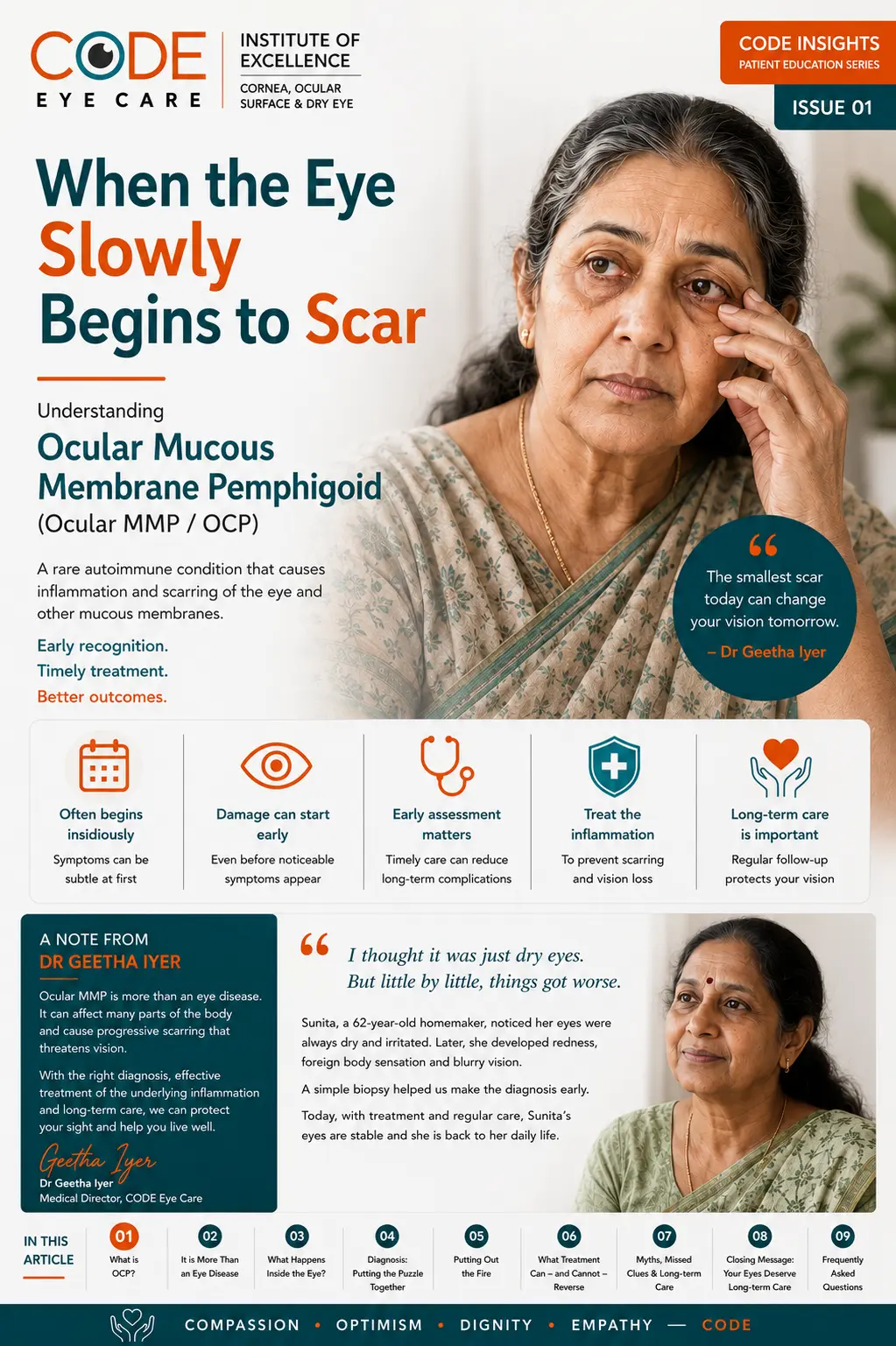
When Dry, Red Eyes Begin to Scar
Understanding what OCP is, how Ocular Mucous Membrane Pemphigoid/Ocular Cicatricial Pemphigoid affects the eyes and other mucous membranes, and how OCP treatment at CODE Eye Care focuses on controlling inflammation, limiting scarring and protecting vision.
Have you been treating persistent redness and dryness as an ordinary eye problem?
“Doctor, I thought it was just dry eyes. Why are my eyes getting worse instead of better?”
That concern can be the beginning of a much more important conversation. Ocular Mucous Membrane Pemphigoid, also called Ocular MMP or OCP, can begin quietly. Early symptoms may be subtle enough to be mistaken for common dry eye or irritation.
OCP is a rare autoimmune condition, meaning the immune system mistakenly attacks the body’s own tissues. In the eyes, this causes ongoing inflammation that can gradually damage and scar the delicate ocular surface. If the inflammation continues, vision can eventually be affected.
The problem is not always obvious at first. Early recognition matters.
- OCP is a rare autoimmune condition affecting mucous membranes
- Eye symptoms can begin subtly
- Inflammation may cause progressive ocular scarring
- Diagnosis may include examination and biopsy
- Long-term treatment and follow-up are essential
What is Ocular Mucous Membrane Pemphigoid (Ocular MMP / OCP)?
Ocular Mucous Membrane Pemphigoid, also called Ocular MMP or OCP, is a rare autoimmune condition. This means the immune system mistakenly attacks the body’s own mucous membranes, including the delicate tissue covering the eye and lining the eyelids.
In the eyes, this immune reaction causes persistent inflammation. Over time, repeated inflammation can lead to scarring of the ocular surface. The disease may begin quietly, with symptoms that seem similar to ordinary dry eye, but the underlying damage can progress even before noticeable changes in vision appear.
OCP can also affect mucous membranes elsewhere in the body, including the mouth, nose, throat, skin and genital area. Symptoms in these areas may appear before, at the same time as, or after the eye symptoms.
Many patients assume that mild redness or dryness means the condition is harmless. Unfortunately, that is not always the case. Early assessment and control of inflammation can help reduce further scarring and protect vision.
Common early eye symptoms include:
OCP is usually a long-term condition. Treatment focuses on controlling inflammation, preventing further scarring, managing symptoms and preserving vision for as long as possible.
Can OCP affect other parts of the body?
Yes. OCP is more than an eye disease.
The same type of tissue affected in the eye also lines several other parts of the body. Symptoms may therefore appear in one area first and another area months or even years later.
Commonly affected areas include:
- Mouth: soreness, ulcers, burning
- Nose: dryness, crusting, bleeding
- Throat: hoarseness, soreness
- Skin: blisters, erosions, scarring
- Genital area: irritation, discomfort
- Eyes: redness, dryness, blurred vision
Mouth involvement may make eating spicy or acidic food uncomfortable. Nasal disease can sometimes cause blockage, while throat involvement may make swallowing difficult.
The timing is unpredictable. Some patients may first seek care for symptoms outside the eyes, while others notice eye problems first.
This is why Ocular MMP needs to be viewed as a condition that may affect several mucous membranes rather than an isolated eye problem.
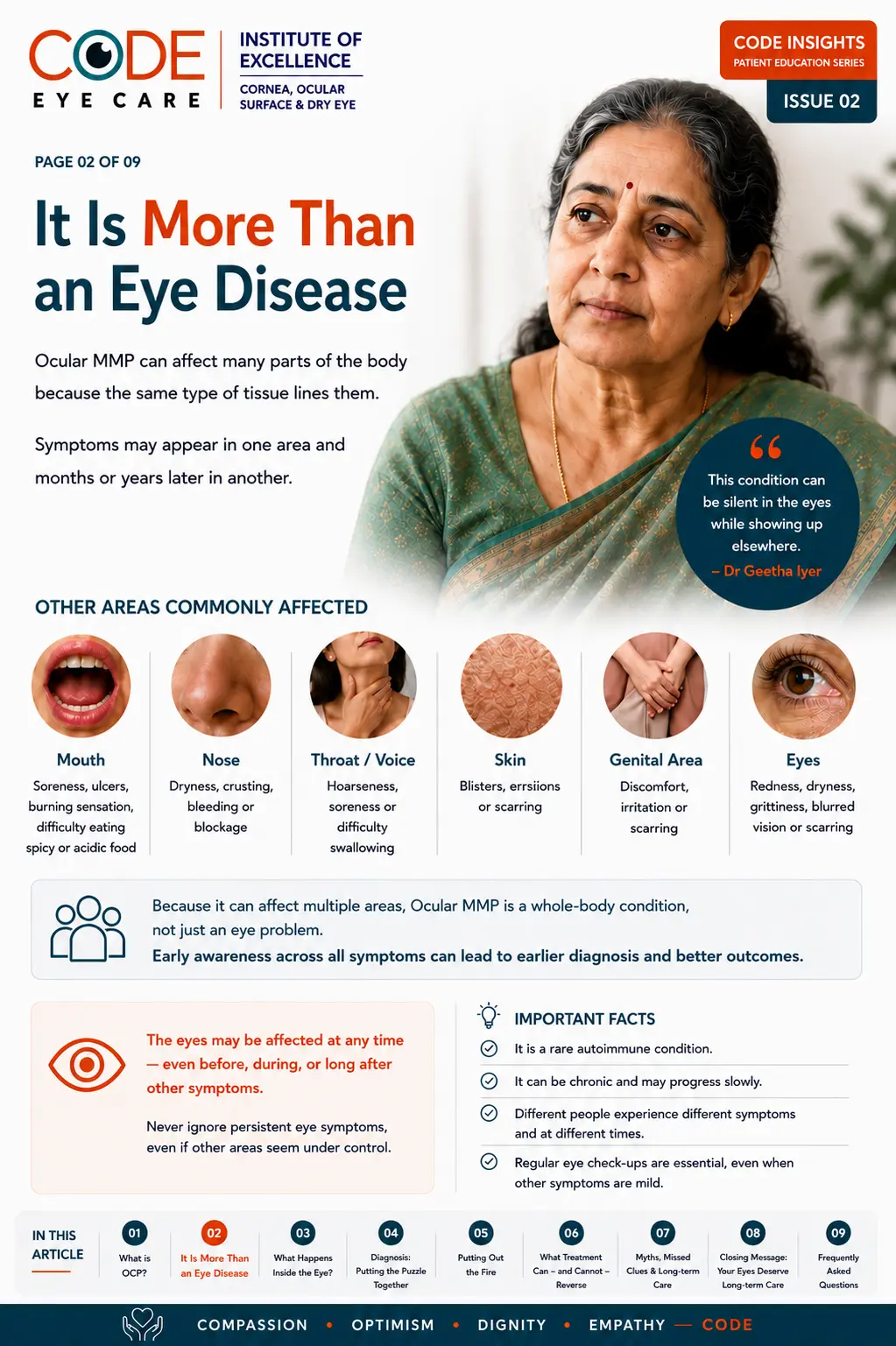
The eyes may become affected before, during or long after symptoms elsewhere in the body. Regular eye assessment remains important even when symptoms outside the eyes appear mild or controlled.
What actually happens to the eyes in OCP?
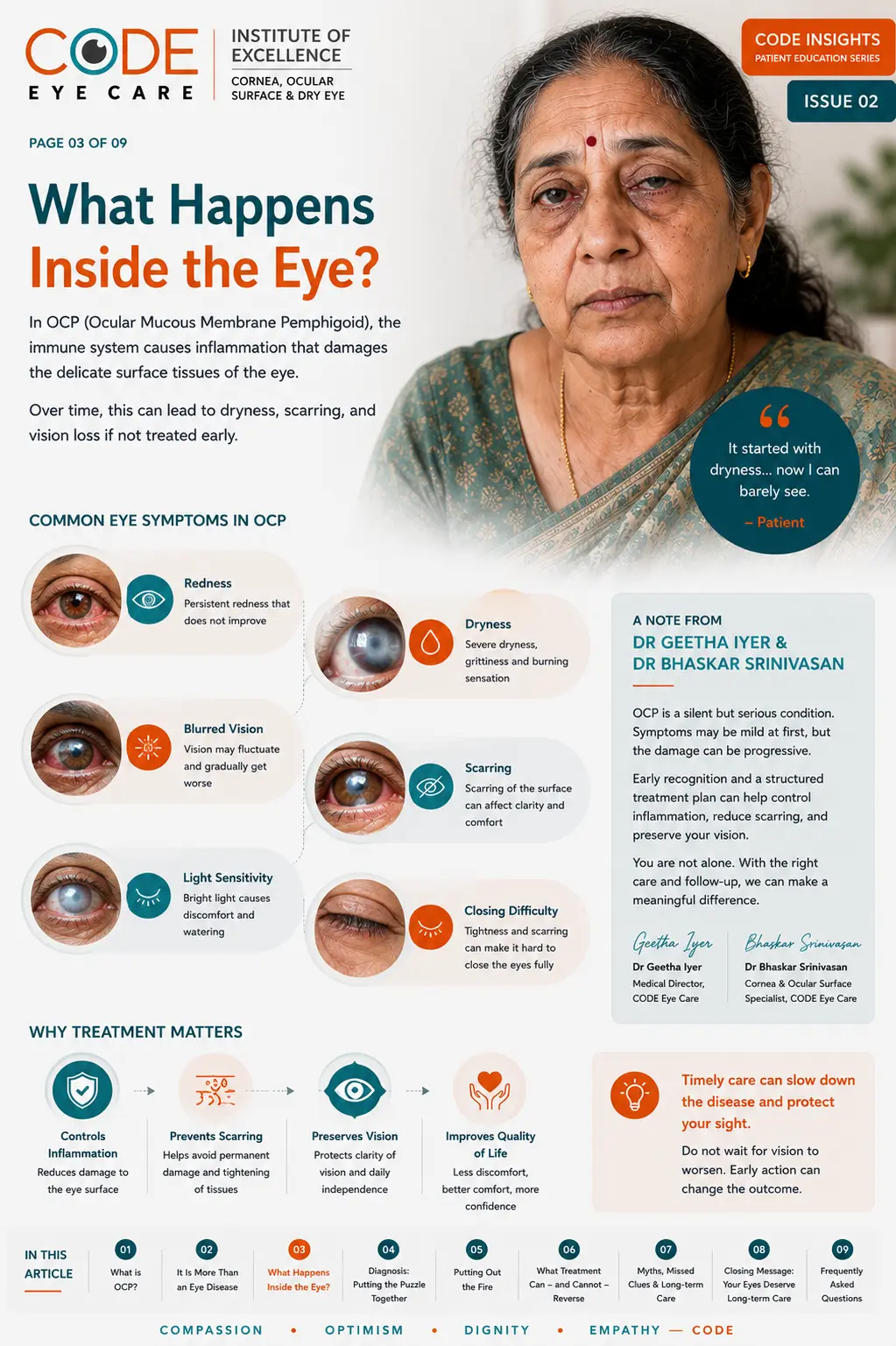
The immune system causes inflammation that damages the delicate tissues covering the eye.
Initially, patients may experience symptoms that appear relatively ordinary:
- Redness
- Dryness
- Blurred vision
- Light sensitivity
- Grittiness
- Burning
- Closing difficulty
Persistent redness may fail to improve as expected. Severe dryness can produce burning and a gritty sensation, while light sensitivity may make bright environments uncomfortable.
Over time, continuing inflammation can produce scar tissue. This can affect the clarity, comfort and normal movement of the eye and eyelids.
Persistent redness may fail to improve as expected. Severe dryness can produce burning and a gritty sensation, while light sensitivity may make bright environments uncomfortable.
Over time, continuing inflammation can produce scar tissue. This can affect the clarity, comfort and normal movement of the eye and eyelids.
The consequences become easier to understand in three stages.
Persistent inflammation irritates the ocular surface like repeated friction on delicate skin, gradually damaging tissue and allowing further problems to develop.
Ocular scarring can behave like a tightening bandage, changing the normal surface of the eye and making movement and closure increasingly difficult.
When inflammation and scarring involve the clear surface of the eye, repeated damage acts like friction across a transparent surface, reducing comfort and potentially affecting vision.
This progression does not occur in exactly the same way for every patient. Some patients remain stable for life; others develop continuing disease that requires prolonged treatment and monitoring.
OCP can appear mild at first, but the damage may be progressive. That is why early recognition and a structured treatment plan matter.
How do doctors diagnose OCP?

There is no single test that provides the complete answer in every patient.
Diagnosis starts with a detailed history and clinical evaluation. Doctors need to understand the symptoms, how long they have been present, medicines being used and whether other parts of the body are affected.
The next step is careful documentation of progression. Clinical photographs and repeated assessments can help doctors identify changes developing over time.
Because OCP can affect different mucous membranes, assessment may also involve other specialists. Dermatology input can help with skin and mucous membrane disease, for example.
A biopsy may be needed. This involves taking a small tissue sample from the conjunctiva or another affected area for laboratory assessment.
Biopsy results can be positive or negative. A negative result does not automatically provide a simple answer, so doctors put the history, examination, progression and test findings together before deciding how the condition should be managed.
Signs doctors look for include:
- Inflammation
- Scarring
- Symblepharon
- Corneal involvement
- Dry eye changes
Symblepharon means scar tissue has created an abnormal adhesion between the eyelid and eyeball. Corneal involvement means that the clear front surface of the eye has developed damage or scarring.
Diagnosis therefore requires more than recognising redness.
OCP can resemble dry eye, allergy or infection. There is no reliable single test that settles every case, so specialist examination, progression over time and biopsy findings may all contribute to the diagnosis.
Why are eye drops alone often not enough?
Inflammation is the process causing the damage in OCP. Controlling it is therefore the most important treatment step.
Topical eye drops can help the ocular surface. Lubricants can reduce dryness, while anti-inflammatory drops or short-term steroids may provide surface relief when advised.
But OCP involves an overactive immune response. Topical treatment alone may therefore be insufficient to control the underlying disease.
Systemic immunosuppressive medicines are required. These medicines work throughout the body to control abnormal immune activity and reduce the inflammation responsible for progressive scarring.
There is no single treatment that works for every patient. Medicines are selected according to disease severity, response and other health conditions, and treatment may take time to show results.
Supportive care also has an important role. This can include lubricants, treatment for dryness, prevention of infections and early management of complications.
Care may involve several specialists:
- Ophthalmologist
- Dermatologist
- Immunologist
- Dentist
- ENT specialist
- Gynaecologist
- Nursing team

As ophthalmologists, we manage eye inflammation and monitor your vision. Other specialists may be involved when the skin, mouth, nose, throat or other mucous membranes are affected.
The treatment goals remain clear: control inflammation, reduce scarring, protect vision, prevent complications and improve quality of life.
Eye drops can improve surface symptoms, but they may not control the immune process driving OCP. Treatment needs to match the severity of the disease and requires regular monitoring.
Can OCP treatment reverse the damage?
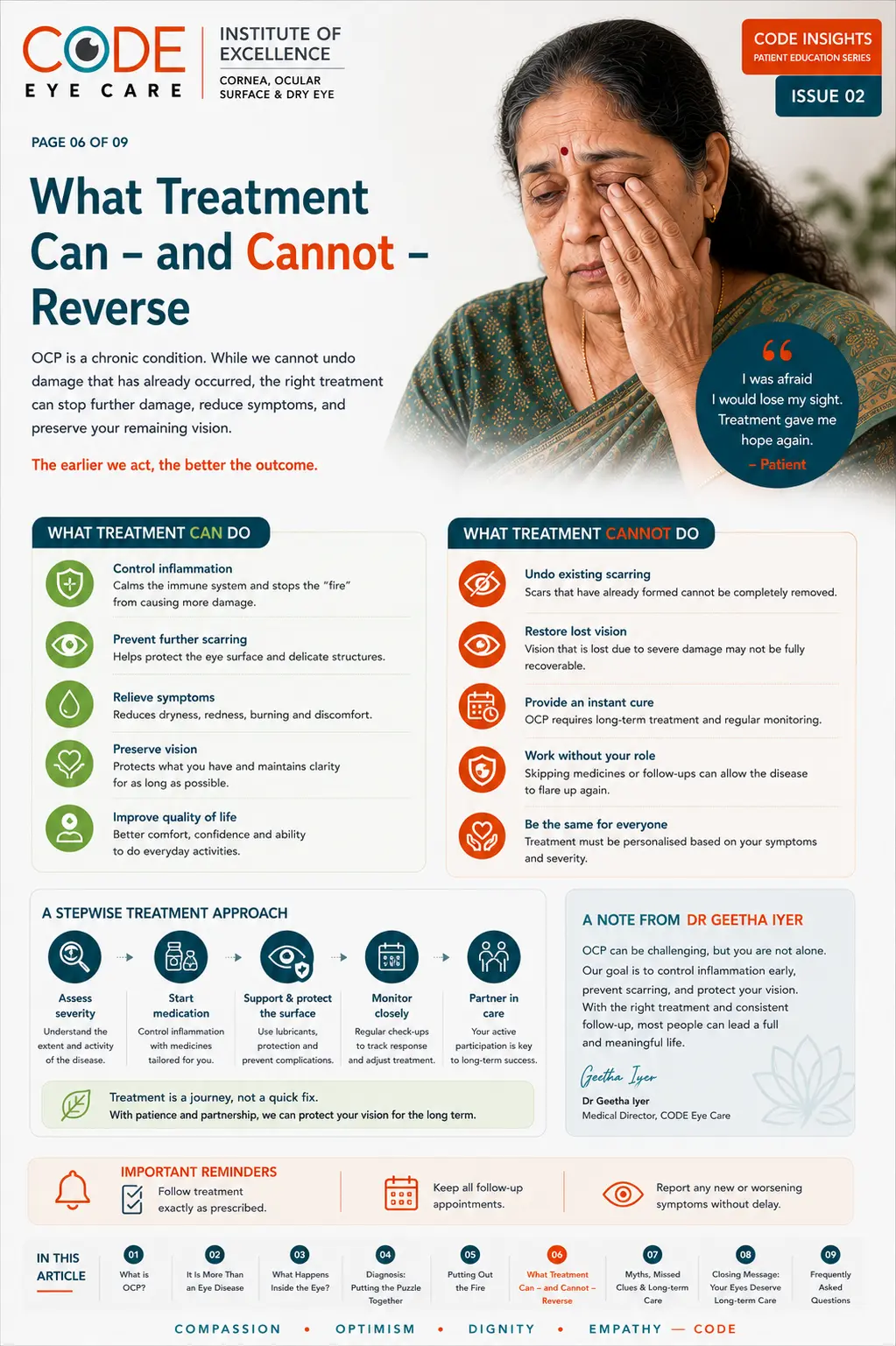
Treatment can do a great deal, but it cannot undo every change that has already occurred.
Effective treatment can control inflammation and help prevent further scarring. It can relieve dryness, redness, burning and discomfort, while helping preserve the vision that remains.
Treatment can also improve comfort and make everyday activities easier.
However, established scar tissue cannot necessarily be completely removed. Vision already lost because of severe damage may not be fully recoverable.
Although this may not be completely reversible, controlling active inflammation can still reduce the risk of further damage and help protect remaining vision.
Treatment also does not provide an instant cure. OCP requires long-term treatment and regular monitoring.
Many patients assume that once redness settles, treatment can be stopped. Unfortunately, that is not always the case. Stopping medicines or missing follow-up appointments can allow inflammation to become active again.
Treatment is also not identical for everyone. Medicines and follow-up need to be personalised according to symptoms, severity and response.
The aim is to act before further scarring takes away options. Treatment cannot promise to restore everything already lost, but controlling inflammation can still make a meaningful difference to what happens next.
Which OCP warning signs are easy to ignore?
OCP is sometimes misunderstood because several early symptoms look like ordinary eye problems.
One common belief is that persistent symptoms are simply dry eye. OCP, however, involves immune-mediated inflammation that can eventually cause permanent damage.
Another assumption is that OCP affects only older people. It can occur at different ages, including in younger adults and children.
Patients may also believe that eye drops alone can cure the condition. Drops can relieve surface symptoms but may not be sufficient to control the underlying inflammation.
Symptoms that deserve attention include:
Dryness and watering can occur together. Watery eyes therefore do not necessarily mean that dryness is absent.
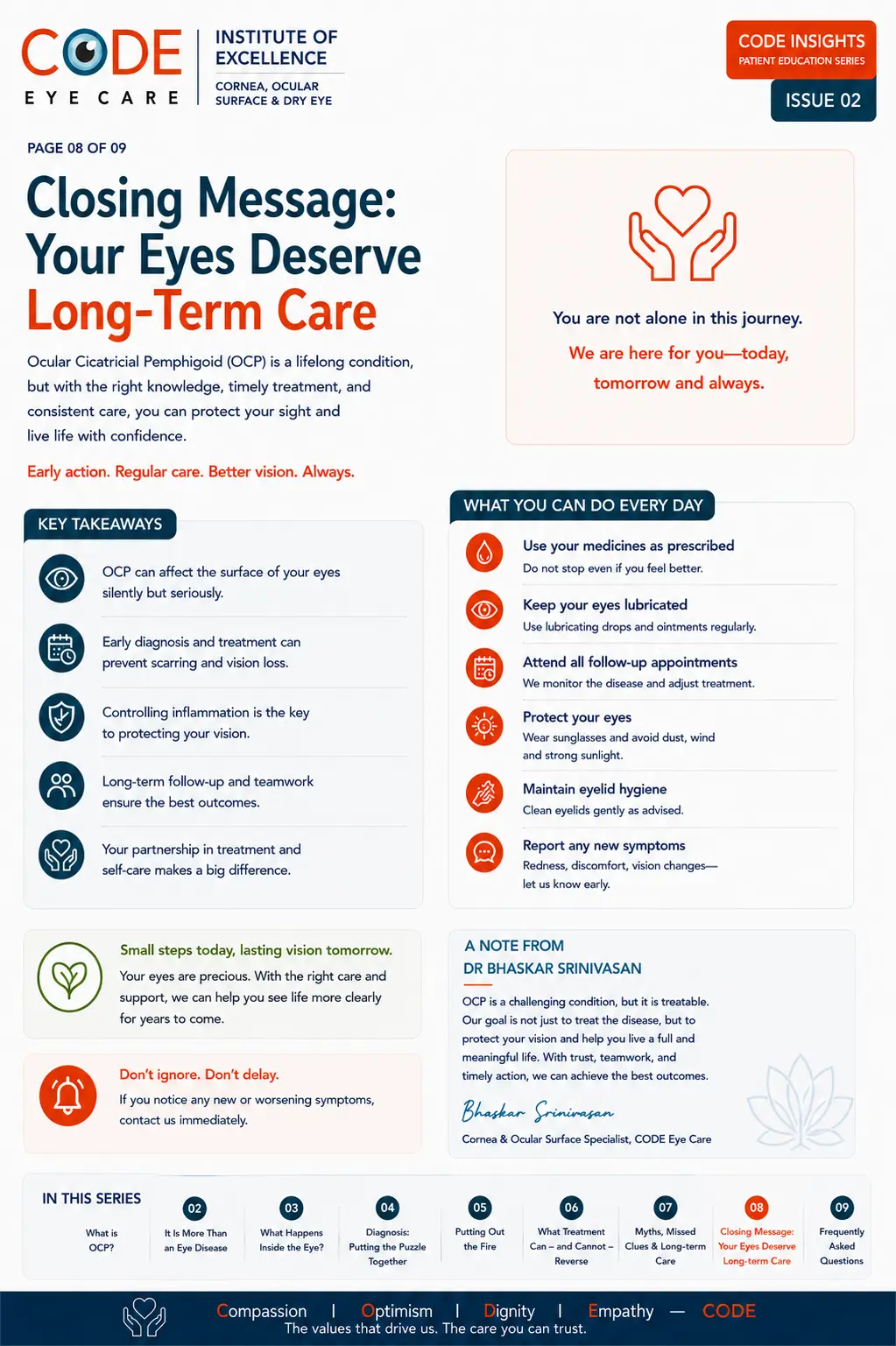
Long-term care means attending regular follow-up appointments even when the eyes feel better, following treatment as prescribed and reporting new or worsening symptoms.
Staying informed also matters because patients need to understand why treatment may continue even during periods of improvement.

What can patients do between appointments?
Long-term care is part of OCP management.
Medicines should be used exactly as prescribed. Patients should not independently stop treatment simply because symptoms have improved.
Lubricating drops and ointments can be used as advised to keep the ocular surface comfortable. Eyelid hygiene should also be maintained according to the treating team’s instructions.
The eyes should be protected from strong sunlight, dust and wind. Sunglasses can provide useful protection outdoors.
Regular follow-up appointments allow doctors to monitor disease activity and adjust treatment when necessary. New redness, discomfort or changes in vision should be reported rather than left until the next routine visit.
The condition may require ongoing care even during periods when symptoms are mild.
There is a limit to what daily care can achieve on its own. These measures support medical treatment rather than replace it.
Long-term partnership with the treating team remains essential.
What do patients commonly ask about OCP?
Can OCP be cured?
No. OCP cannot currently be considered curable, but appropriate treatment and continued care can help control the disease and reduce further damage. Long-term monitoring is usually required.
Will I lose my vision?
No, not necessarily. When OCP is recognised early and treated appropriately, many patients can continue active lives with useful vision. Severe established damage, however, may cause visual loss that cannot be fully recovered.
I feel better now. Will I have to keep using treatment?
Yes, treatment may need to continue even when symptoms improve. OCP can flare again, so medicines should not be stopped without advice from the treating team.
My symptoms are controlled. Do I still need regular appointments?
Yes. Follow-up remains essential because doctors need to monitor the condition and adjust treatment when required. Feeling better does not always mean that continued observation is unnecessary.
I need to travel. Can I still go?
Yes. Most patients can travel, but medicines should be carried and lubricating drops used as advised. Follow-up schedules should also be planned so that ongoing care is not interrupted.

I have seen patients arrive after months of treating what they believed was ordinary dry eye, and some arrive believing that nothing could be done once scarring had begun. OCP can be challenging because the early symptoms do not always reflect what is happening to the ocular surface.
I tell patients that this is a journey that needs patience and regular care. We cannot reverse every scar or guarantee that lost vision will return. What we can do is recognise inflammation, treat it appropriately, monitor the eyes closely and work to protect remaining vision.
When Persistent Eye Symptoms Need Another Look
If persistent redness, dryness, burning, light sensitivity, mucus or blurred vision keeps returning despite routine eye drops, these symptoms should not simply be dismissed as ordinary irritation.
There is support available to help you understand the problem and plan appropriate long-term care.