
Glaucoma Treatment
in Chennai
You Were Told You Have Glaucoma. Now What?
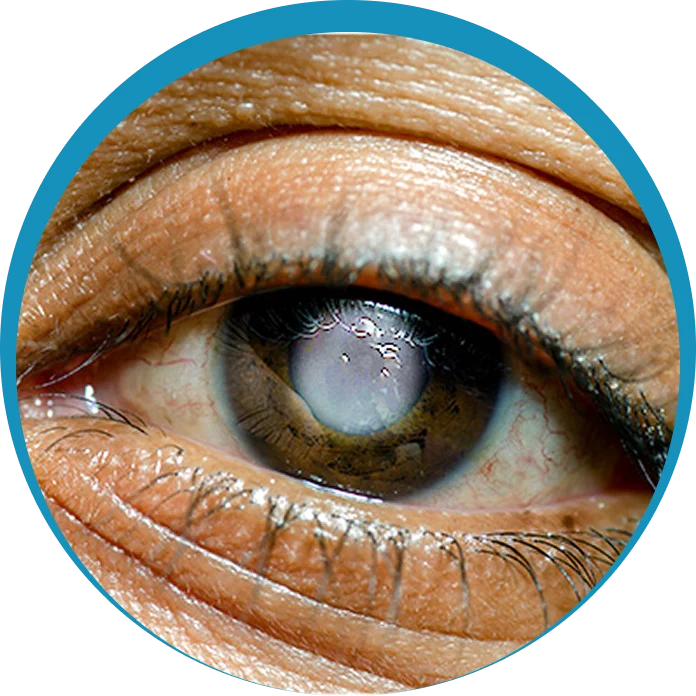
A glaucoma diagnosis can feel disorienting, especially when your vision still seems fine. That’s one of the most concerning aspects of this disease: it can quietly steal peripheral vision for years before you notice anything wrong.
At CODE Eye Care, we understand how unsettling that moment is; sitting in an exam chair, hearing a diagnosis you didn’t see coming. Our role isn’t just to prescribe drops and send you on your way. It’s to help you truly understand what’s happening inside your eye, what’s at risk, and what we can do together to protect your vision for the long term.
What Is Glaucoma, and
Why Does It Matter So Much?
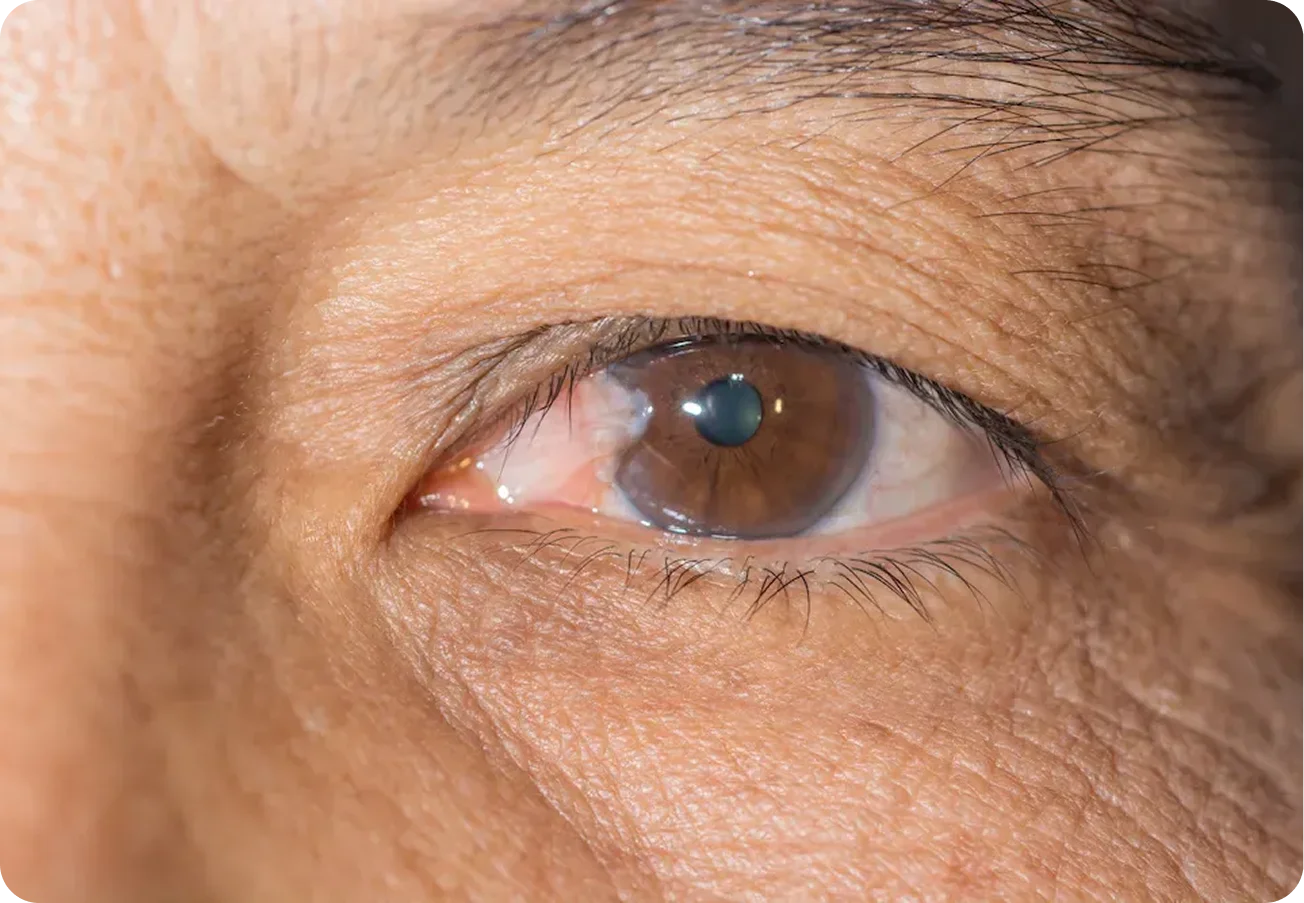
Glaucoma is a group of eye conditions that damage the optic nerve, the cable that sends visual information from your eye to your brain. In most cases, that damage is driven by elevated intraocular pressure (IOP), though glaucoma can progress even when pressure appears normal.
What makes glaucoma particularly serious is that the damage it causes is irreversible. Once optic nerve fibres are lost, they don’t regenerate. This is why early detection and consistent management aren’t optional.
But with the right glaucoma specialist and a treatment plan tailored to you, the vast majority of people with glaucoma keep their functional vision for life.
What Types of Glaucoma Do We Treat at CODE Eye Care in Chennai?
Primary Open-Angle Glaucoma
The most common form. Pressure builds gradually because the eye's drainage system becomes less efficient over time. Often has no symptoms until significant damage has occurred.
Normal-Tension Glaucoma
A subset of open-angle glaucoma where optic nerve damage progresses despite IOP readings that appear within normal range. This is a particularly nuanced diagnosis that requires careful monitoring and individualised treatment planning.
Angle-Closure Glaucoma
Caused by a physical blockage of the drainage angle. It can be acute (a sudden, painful emergency) or chronic (slow and symptom-free). Requires a different treatment approach than open-angle disease.
Secondary Glaucoma
Glaucoma that develops as a result of another condition, such as pseudoexfoliation syndrome, pigment dispersion, uveitis, trauma, or prior eye surgery.
Congenital & Pediatric Glaucoma
Rare, but present from birth or early childhood. It requires specialised evaluation and often surgical intervention.
Refractory Glaucoma
Pressure that continues to climb despite multiple medications or prior surgical procedures. This is among the most complex presentations we manage, and one we have particular experience navigating.
These require surgical modifications, endothelial protection strategies, and sometimes staged procedures.
Our treatment decisions are guided by corneal health, retinal status, optic nerve function, and long-term visual goals, not just lens opacity.
How Is Glaucoma Diagnosed at CODE Eye Care?
Diagnosis is never a single data point. At CODE Eye Care, our treatment decisions are guided by a comprehensive picture, not just an IOP reading.
Tonometry
Visual field testing
OCT (optical coherence tomography)
Gonioscopy
Pachymetry
Optic nerve head photography
We also review prior records carefully. If you’ve been managed elsewhere and your disease is progressing or if you’re not sure whether it is, we’ll give you an honest assessment of where things stand.
How Is Glaucoma Treated?
There is no single “glaucoma treatment.” What’s right for you depends on the type of glaucoma you have, how far it’s progressed, your age, your overall health, your tolerance for medications, and what your goals are. At CODE Eye Care, we approach every patient as an individual, not a protocol.
Glaucoma Eye Drops and Medications
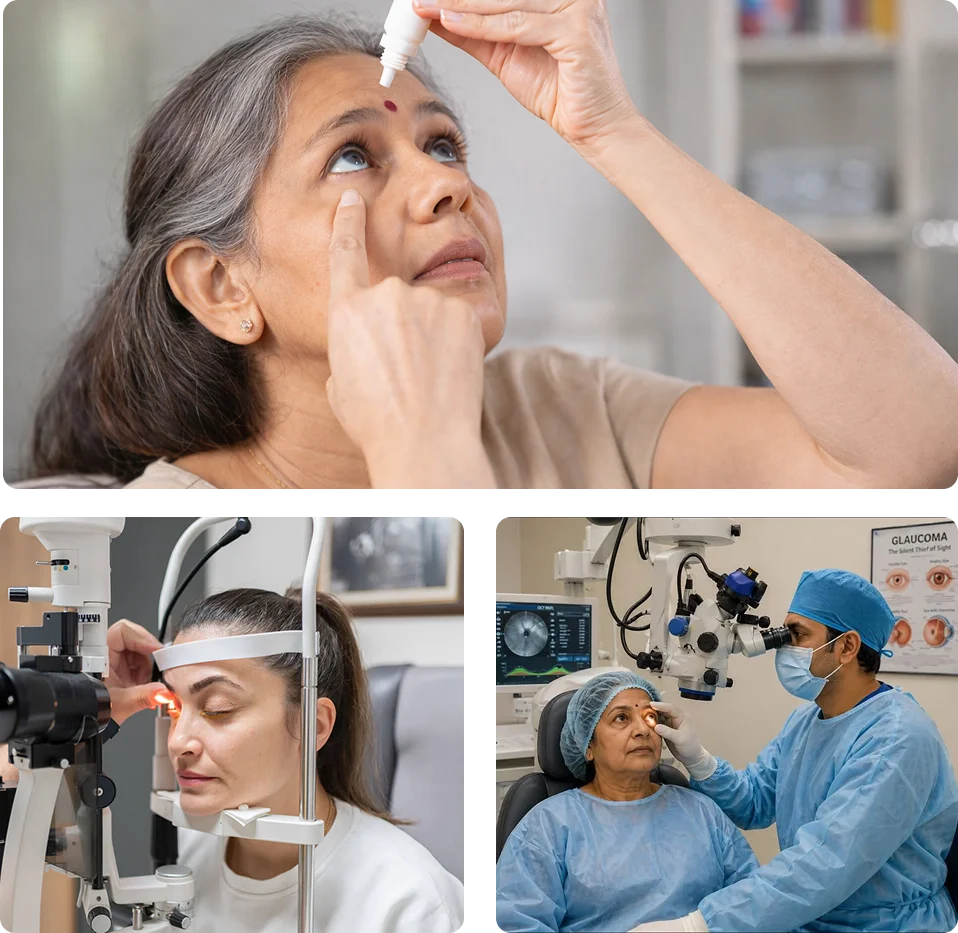
For most patients, treatment begins with prescription eye drops. These work either by reducing the amount of fluid the eye produces or by improving how fluid drains out of the eye.
We don’t prescribe drops casually. Side effects are real; systemic absorption from eye drops can affect heart rate, breathing, and other systems and adherence to a daily drop regimen is genuinely hard. We talk honestly with our patients about this. If a drop regimen isn’t realistic for your lifestyle, that matters, and we’ll find a better path.
Laser Glaucoma Treatment in Chennai
For many patients, laser treatment offers a meaningful alternative or complement to daily medications.
Selective Laser Trabeculoplasty (SLT) is a low-risk, in-office procedure that improves drainage through the eye’s natural outflow channel. In our experience, SLT can reduce IOP significantly, often as much as a first-line medication and for some patients, it eliminates the need for drops. It can also be repeated if needed.
Laser Peripheral Iridotomy (LPI) is used to treat angle-closure glaucoma by creating a small opening in the iris to restore normal fluid flow.
We discuss laser options early in the treatment conversation, not as a last resort, but as a legitimate first-line option for the right patient.
Glaucoma Surgery in Chennai
We do not recommend surgery unless it is genuinely necessary, and when it is, we make sure you understand why, what to expect, and what the recovery involves. Surgery is not a failure of medical treatment. For patients with advanced disease, refractory pressure, or specific anatomical factors, it’s often the most effective path to preserving vision.
Trabeculectomy — The traditional gold-standard filtering procedure, creating a new drainage channel. Still highly effective for patients who need significant, sustained pressure reduction.
Minimally Invasive Glaucoma Surgery (MIGS) — A newer category of procedures designed to lower IOP with less tissue disruption and faster recovery than traditional surgery. Options include micro-stent implantation, trabecular bypass procedures, and others. MIGS is often combined with cataract surgery when both conditions are present.
Tube Shunt Surgery — A small silicone tube is implanted to redirect fluid drainage. Particularly valuable in eyes with scarring from prior procedures or high surgical risk.
Cyclophotocoagulation — Laser energy directed at the ciliary body to reduce fluid production. Used selectively in cases where other options have been exhausted or are not appropriate.
In our experience with advanced glaucoma and refractory cases, the surgical decision is never simple, and it should never feel rushed. We take the time to walk through the options, outcomes data, and your specific situation before any decision is made.
What If My Glaucoma Hasn't Responded to Prior Treatment?
This is a question we hear often from patients who come to us after years of management elsewhere. Sometimes pressure is controlled, but the disease is still progressing. Sometimes, multiple medications and surgeries haven’t achieved stability. Sometimes patients are simply looking for a second opinion before agreeing to an intervention they’re not sure they need.
CODE Eye Care was built in part to serve as a tertiary referral centre, a destination for exactly these kinds of complex, difficult-to-manage cases. We work closely with referring optometrists and ophthalmologists throughout the region, and we welcome patients who have exhausted first-line options and need a more specialised approach.
If you’ve been told your glaucoma is “stable,” but something doesn’t feel right, trust that instinct. A second opinion costs nothing but time.
Living with Glaucoma: What Does Long-Term Management Look Like?
Glaucoma management is a lifelong commitment, and we don’t take that lightly. Patients with glaucoma need regular monitoring, typically every three to six months for those with active disease, to track pressure trends, visual field changes, and structural progression over time.
At CODE Eye Care, we build long-term relationships with our glaucoma patients. We track your data longitudinally, adjust treatment when the evidence calls for it, and communicate clearly about what we’re seeing. You’ll never leave an appointment wondering what just happened or what comes next.
We also recognise that glaucoma management can be emotionally taxing. The uncertainty of a progressive disease, the fear of eventual vision loss, is real. Our team is here to answer questions honestly, address concerns without dismissing them, and help you navigate this diagnosis with clarity rather than anxiety.
When Should You See a Glaucoma Specialist?
You've been diagnosed with glaucoma or ocular hypertension and want a specialist's assessment
Your intraocular pressure is not responding to medications
Your visual fields are continuing to deteriorate despite treatment
You have a strong family history of glaucoma and have never had a comprehensive evaluation
You've been told you may need glaucoma surgery and want a second opinion
You have complex eye anatomy, prior eye surgery, or a systemic condition that complicates management
You've had a sudden onset of eye pain, redness, and blurred vision (potential acute angle-closure seek evaluation urgently.
Why CODE Eye Care for Glaucoma?
There are many places to have an eye pressure check. There are fewer places equipped to manage the full spectrum of glaucoma, including its most challenging presentations, with the depth of clinical experience and the diagnostic precision that makes a real difference in outcomes.
At CODE Eye Care, glaucoma care isn’t an afterthought. It’s a core part of who we are and what we were built to do. We combine advanced imaging technology, a full range of medical, laser, and surgical options, and a genuinely patient-centred philosophy to deliver care that’s thoughtful rather than transactional.
If you’re navigating a new diagnosis, a difficult-to-control case, or simply haven’t had a thorough glaucoma evaluation in a while, we’d be glad to see you.
Vision lost to glaucoma cannot be recovered. But vision at risk can be protected with the right diagnosis, the right treatment, and consistent long-term care.
Contact CODE Eye Care to schedule a glaucoma evaluation or request a referral consultation. Our team will reach out to confirm your appointment and answer any questions before you arrive.
CODE Eye Care provides comprehensive glaucoma evaluation and management, including laser treatment and glaucoma surgery in Chennai, for patients across the region. We accept referrals from optometrists and ophthalmologists for complex and refractory cases.