
Cornea Treatment in Chennai

What Is the Cornea, and Why Is It Important?
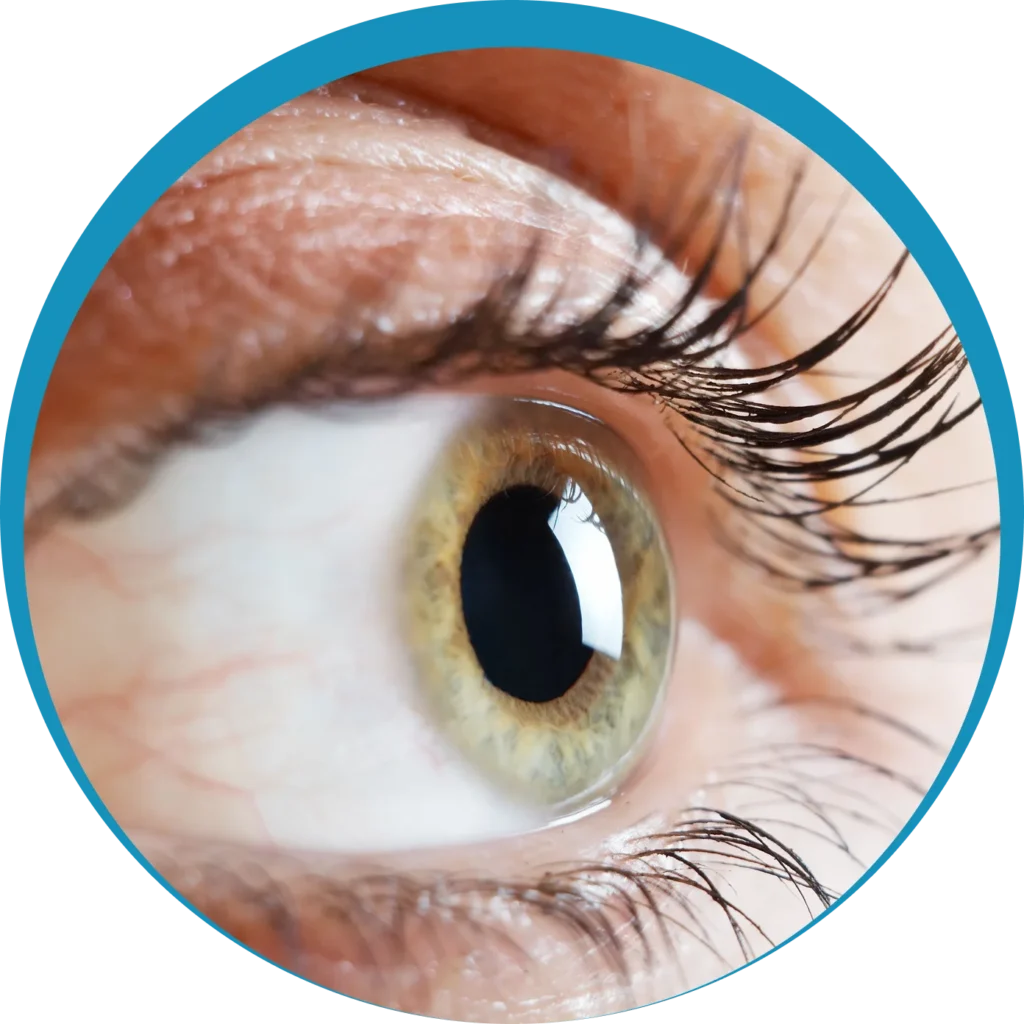
The cornea is the clear front surface of your eye. It helps focus light and plays a big role in how clearly and sharply you see.
Even small changes in the cornea can affect your clarity, contrast, and overall quality of vision.
Not all corneal problems are the same. Some are minor and get better with simple treatment. Others need careful management over a longer period.
Common Corneal Diseases and Disorders
This is where most patients get confused. You may have been told a term you don’t fully understand.
Infections
Infections of the cornea that can worsen quickly if untreated
Examples:
- Conjunctivitis (red eye / “Madras eye”)
- Adenoviral keratoconjunctivitis
- Bacterial corneal ulcers
- Fungal keratitis
- Viral keratitis (Herpes simplex / Zoster)
- Acanthamoeba keratitis
- Atypical infections (e.g., Mycobacteria)
Degenerative & Ectatic Conditions
Conditions where the cornea becomes weak, thin, or changes shape
Examples:
- Keratoconus
- Keratoglobus
- Pellucid marginal degeneration
- Terrien’s marginal degeneration
- Post-LASIK ectasia
Corneal Dystrophies
Inherited conditions that affect corneal clarity over time
Examples:
- Fuchs’ endothelial dystrophy
- Lattice dystrophy
- Granular dystrophy
- Macular dystrophy
- Map-dot-fingerprint dystrophy (EBMD)
Congenital Conditions
Conditions present from birth affecting the corneal structure
Examples:
- Peters anomaly
- CHED (Congenital hereditary endothelial dystrophy)
- Corneal changes in congenital glaucoma
- Congenital corneal scars
- Storage disorders (e.g., mucopolysaccharidosis)
Inflammatory Disorders
Conditions where the body’s immune response damages the cornea
Examples:
- Mooren’s ulcer
- Peripheral ulcerative keratitis
- Stromal melt
- Episcleritis
- Scleritis
- Sjogren’s Disease
Trauma & Post-Surgical Conditions
Damage due to injury or prior procedures
Examples:
- Chemical injuries
- Thermal burns
- Post-traumatic corneal scars
- Pseudophakic bullous keratopathy
- Silicone oil–related keratopathy
Surface & Functional Disorders
Conditions affecting how the cornea heals or stays protected
Examples:
- Neurotrophic keratopathy
- Exposure keratopathy (facial palsy, incomplete eyelid closure)
- Conjunctivochalasis
Tumours & Other Conditions
Uncommon but important surface abnormalities
Examples:
- Limbal dermoids
- Ocular surface tumours (OSSN)
- Iris cysts
In our experience with advanced corneal disease, infections and thinning disorders can worsen faster than symptoms suggest.
Urgent Signs to Watch For
Not every corneal condition is an emergency. But some are.
See a doctor right away if you notice:
- A sudden drop in vision
- Increasing pain or sensitivity to light
- Redness that is not getting better
- A white or grey patch on the eye
- Blurred, distorted, or doubled vision
- Recent eye injury or chemical exposure
Some corneal problems get worse faster than the symptoms suggest. Don’t wait.
How Is Corneal Disease Diagnosed?
Diagnosing a corneal condition is not about one single test. It is about understanding the structure, depth, and how fast the condition is changing.
At CODE Eye Care, cornea treatment in Chennai begins with a detailed evaluation using:
- Slit-lamp examination– A close look at all the layers of the cornea
- Corneal topography– Shows the shape of the cornea and picks up early changes
- Pachymetry– Checks how thick the cornea is
- Specular microscopy– Looks at the cells in the innermost layer of the cornea
- AS-OCT– A detailed scan of the front part of the eye
- Microbiology (corneal scrapings)– Finds out exactly what is causing an infection
If you have been seen elsewhere, we will review your previous reports as well.
Treatment Options for Corneal Diseases
Not all patients require surgery. Most treatments begin conservatively and progress only if needed.
Medical Management
- Antibiotic, antiviral, or antifungal eye drops
- Anti-inflammatory treatment
- Lubricating drops and surface healing support
Laser-Based Treatments
Phototherapeutic Keratectomy (PTK)– A laser treatment to remove surface scars or irregularities on the cornea
Corneal Stabilisation
Collagen Cross-Linking (CXL)– A procedure that strengthens the cornea to stop it from thinning or bulging further; commonly used for keratoconus
Minor & Surface Procedures
Used when healing needs support
- Corneal scraping (for infections)
- Alcohol epithelial debridement
- Amniotic membrane grafting
- Tenon’s patch graft
- Conjunctival flap
Corneal Transplantation
When the deeper layers of the cornea are affected, a transplant may be needed.
- Penetrating Keratoplasty (PK)– Replaces the full thickness of the cornea
- Therapeutic PK- to control active disease
- Optical PK- to restore vision
- Lamellar Transplants– Replace only the damaged layer, leaving healthy tissue in place
- DSEK / DSAEK
- DMEK- the most precise option, with the fastest recovery and lowest rejection rates
- Other layer-specific procedures, depending on the case
- Penetrating Keratoplasty (PK)– Replaces the full thickness of the cornea
Other Surgical Procedures
- Pterygium excision with conjunctival graft
- Limbal dermoid excision
Vision Restoration (Advanced Cases)
Artificial Cornea (Keratoprosthesis)– Used when a donor cornea transplant is not a suitable option.
For patients with advanced disease, specialised cornea damage treatment in Chennai may involve these surgical or reconstructive options when conservative treatment is not enough.
- Corneal Conditions Linked to Other Eye or Systemic Diseases
- Glaucoma
- Retina Disorders
- Systemic Conditions like RA, SLE, others
Step-by-Step Treatment Approach
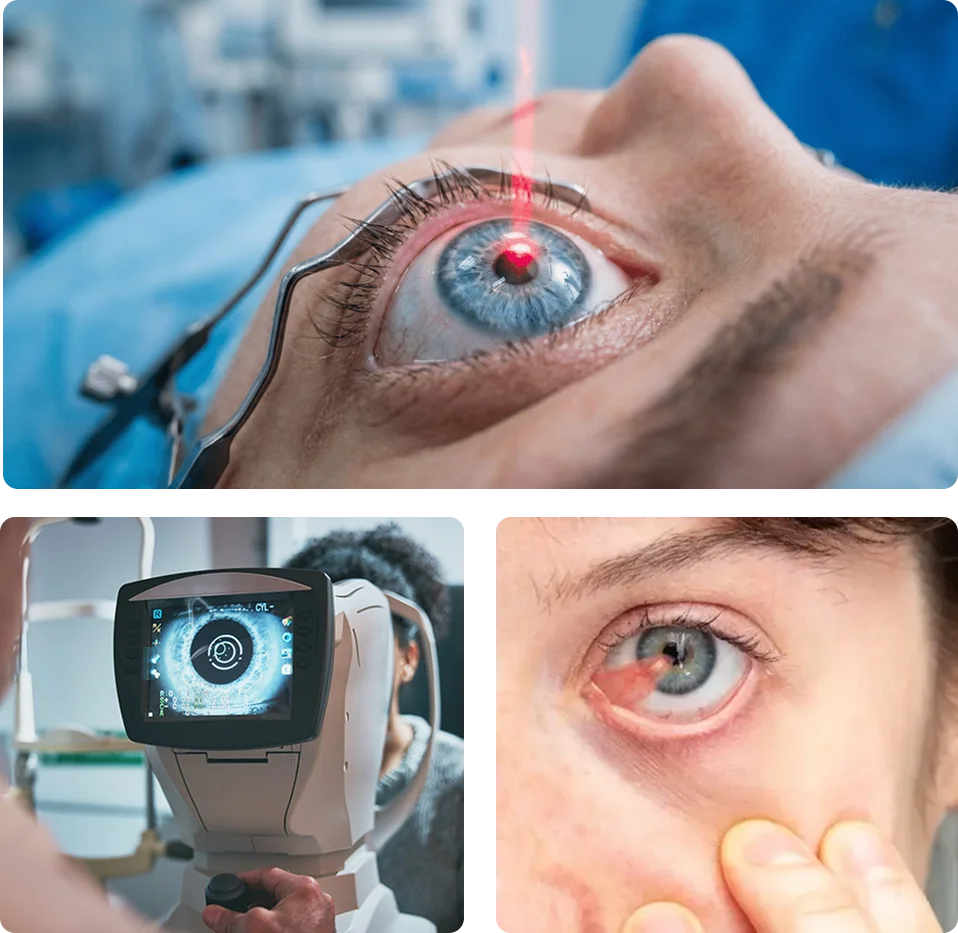
At CODE Eye Care, cornea treatment in Chennai follows a structured pathway.
Diagnosis
Staging
Medical management
Monitoring
Escalation only if needed
Most patients do not need surgery at the start.
What Happens If You Delay Treatment?
Corneal conditions rarely stay the same on their own. Waiting too long can lead to:
- Permanent scarring that cannot be reversed
- Deeper structural damage
- Progressive thinning
- Less chance of good vision recovery, even after treatment
The earlier a problem is caught, the more options there are.
Why Follow-Up Is Important?
The infection or inflammation coming back
The condition getting worse without obvious signs
A longer recovery than expected
Regular check-ups help confirm that things are truly stable, not just feeling better.
What Results Can You Expect?
Every case is different, but here is a general guide:
- Surface and early conditions → Usually good recovery with the right treatment
- Moderate disease → Noticeable improvement in vision and comfort
- Advanced disease → Partial or complete recovery; keeping the eye stable is often the main goal
- Corneal transplant → Restores vision and structure of the eye. Extent of recovery depends on the severity of the disease and the health of the eye.
The goal is always a stable, functional vision.
When Should You See a Cornea Specialist?
It is worth seeing a specialist if:
- Your vision is getting worse, even with glasses or drops
- Your current treatment is not helping
- You have been told you may need surgery
- You want a second opinion before making a decision
Seeing a specialist earlier gives you more time and more options.
Why CODE Eye Care for Cornea?
CODE Eye Care is a tertiary referral centre for corneal and ocular surface diseases in Chennai.
- Each of our cornea specialists has over 20 years of experience
- We manage routine, complex, advanced, and rare corneal conditions
- Patients are referred to us from across India when a case is difficult, or the way forward is unclear
Many patients come to us after earlier treatment, unsure what to do next, for better clarity and understanding.
We focus on getting the diagnosis right, treating at the right stage, and planning for long-term visual stability.
Take the Next Step
If you are considering cornea treatment, consult our team for a detailed evaluation.
Clarity begins with the right diagnosis.