
Cataract Surgery
in Chennai
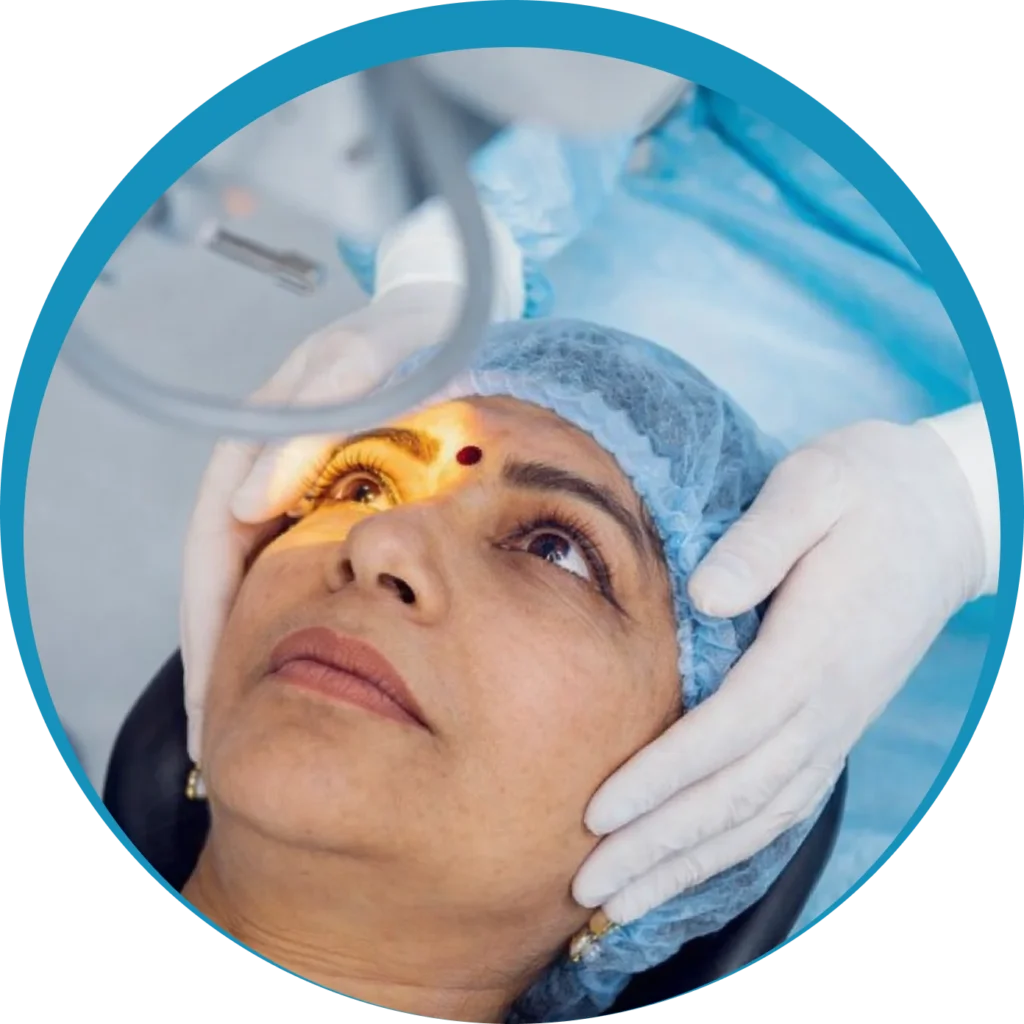

Cataract is not just a “white spot in the eye.” It is a gradual clouding of the natural lens that affects clarity, contrast, night driving, and depth perception.
At CODE Eye Care, we approach cataract surgery as a precision procedure, not a routine camp surgery. Many of our patients come to us after being told their case is “complicated” due to corneal disease, prior eye surgery, trauma, high myopia, uveitis, or poorly dilating pupils.
Our focus is not volume. It is outcomes.
When Is Cataract Surgery Really Needed?
Cataract surgery is not determined solely by lens appearance. It is decided based on functional impact.
Vision affects work, reading, or driving
Night glare becomes disabling
Frequent power changes no longer help
A cataract prevents retina or glaucoma treatment
You have a coexisting corneal disease where clarity matters
At CODE Eye Care, we do not recommend surgery unless it genuinely improves quality of life or protects long-term vision.
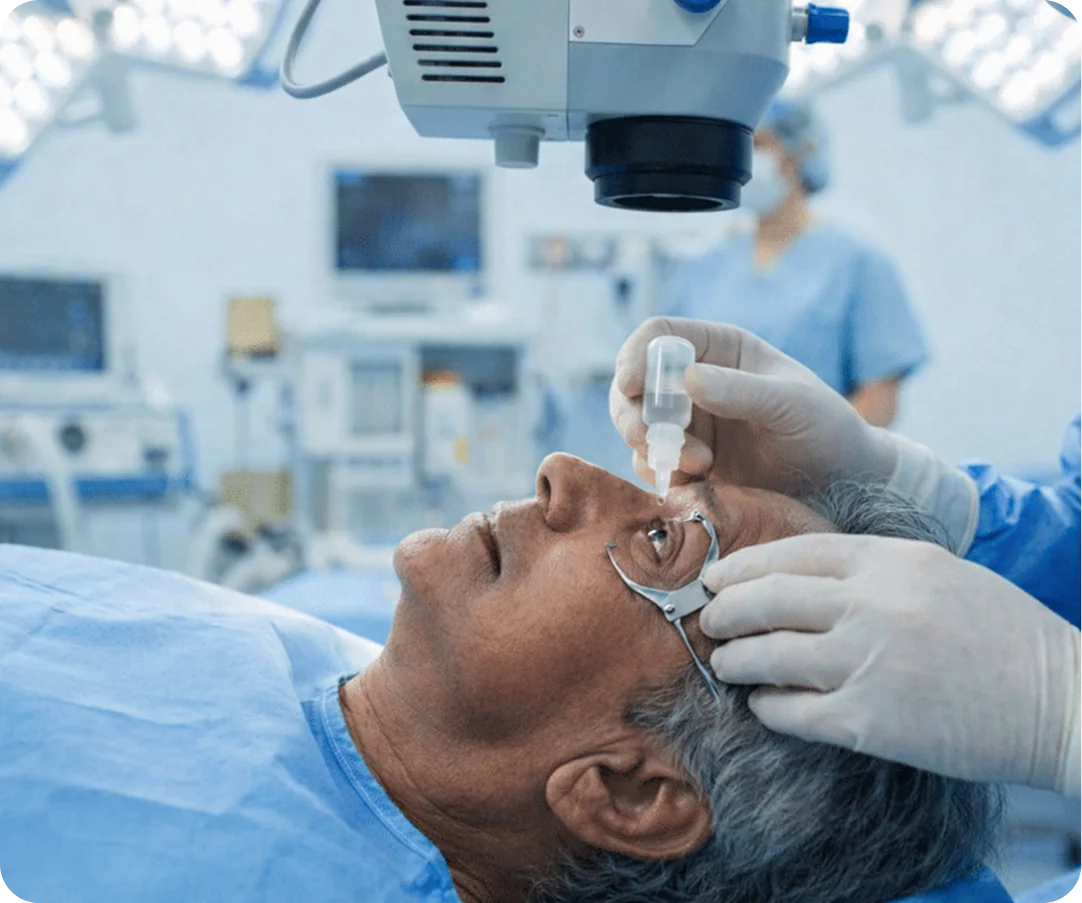
How Is Cataract Surgery in Chennai Performed at CODE Eye Care?
Modern cataract surgery is done using phacoemulsification. The cloudy lens is removed through a small incision and replaced with a foldable artificial lens.
The incision is self-sealing. No stitches in most cases. The procedure usually takes 10 to 20 minutes.
But the surgery itself is only one part.
The real difference lies in:
- Pre-operative corneal evaluation
- Precise IOL power calculation
- Ocular surface optimization
- Managing small pupils or weak zonules
- Handling coexisting glaucoma or retinal disease
In our experience with advanced corneal disease and ocular surface disorders, planning determines outcome more than the surgery time.
What Makes Cataract Surgery Complex?
Most clinics treat cataract as a standalone issue. We do not.
Cataract with Fuchs endothelial dystrophy
Cataract in post-LASIK eyes
Cataract with keratoconus
Cataract with glaucoma
Cataract in uveitis patients
Traumatic cataracts
Dense brunescent cataracts
These require surgical modifications, endothelial protection strategies, and sometimes staged procedures.
Our treatment decisions are guided by corneal health, retinal status, optic nerve function, and long-term visual goals, not just lens opacity.
Which Lens Is Right for You?
Type, Benefits, Limits, Cost, Durability
Monofocal lens
Toric lens
Multifocal lens
Extended Depth of Focus (EDOF) lens
All modern intraocular lenses are biocompatible and designed to last a lifetime. They do not “expire.” The key is correct patient selection.
At CODE Eye Care, our treatment decisions are guided by corneal clarity, retinal health, lifestyle needs, and long-term safety. We do not recommend premium lenses unless the eye can truly support them.
How Do We Decide Which Lens Is Right for You?
Choosing a lens is not about “premium vs basic.” It is about whether your eye can safely support a specific optical design.
Corneal Health
Irregular cornea, prior LASIK, dry eye, keratoconus, or endothelial weakness can reduce the quality of vision with multifocal lenses.
Retina and Macula Status
Early macular degeneration or diabetic retinal changes can make premium lenses disappointing.
Glaucoma or Optic Nerve Damage
Contrast sensitivity matters. Multifocal lenses may not be ideal for patients with advanced glaucoma.
Pupil Behaviour
Large pupils increase with certain lenses.
Lifestyle Needs
Night driving? Extensive screen work? Reading fine print? Each has different visual demands.
Personality and Expectation
Some patients tolerate mild halos. Others find them unacceptable.
In our experience, inappropriate lens selection is a bigger cause of dissatisfaction.
We often advise monofocal or toric lenses in complex corneal or glaucoma cases, even when patients initially request multifocal options. Long-term visual stability matters more than spectacle independence.
We do not recommend premium lenses unless the eye anatomy and visual potential truly support them.
What Is the Cost of Cataract Surgery in Chennai?
Cataract surgery cost in Chennai varies depending on:
- Type of lens selected
- Complexity of the case
- Technology used
- Coexisting eye conditions
- Hospital setup
In most tertiary centres, the cost typically ranges from ₹25,000 to ₹1,40,000 per eye. Highly complex cases involving corneal compromise or combined procedures may vary further.
At CODE Eye Care, we explain the cost transparently after a detailed evaluation. There are no hidden upgrades during surgery.
What Is Recovery Like After Cataract Surgery?
Most patients notice clearer vision within a few days.
- 2 to 4 weeks for standard cases
- Longer if there is corneal oedema or pre-existing disease
- Anti-inflammatory and antibiotic drops
- Surface lubrication, if required
- Pressure monitoring in glaucoma patients
We closely monitor high-risk patients. Especially those with endothelial weakness or previous grafts.
Is Cataract Surgery Safe?
Cataract surgery is among the safest procedures in medicine.
- Case selection
- Surgical expertise
- Sterility protocols
- Post-operative follow-up
At CODE Eye Care, we treat every cataract surgery as a vision-critical intervention. Not a routine turnover procedure.
Why Choose a Cataract Surgeon in Chennai?
If your case is straightforward, many centres manage it.
- Corneal disease
- Previous transplant
- Glaucoma
- High myopia
- Retinal problems
- Pediatric or traumatic cataract
You need an evaluation by an experienced cataract surgeon who understands the complexity of the anterior segment.
At CODE Eye Care, cataract treatment in Chennai is integrated with expertise in cornea, glaucoma, and retina treatment under one roof. This matters in complex eyes.
Our Philosophy
At CODE Eye Care, we approach cataract surgery with restraint and responsibility.
- Surgery should improve meaningful vision
- Lens selection should be individualised
- Complex eyes deserve senior surgical oversight
- Long-term clarity is more important than immediate spectacle independence
We do not rush decisions. | We study the eye first.
When Should You Seek an Evaluation?
If you notice progressive blurring, glare, or difficulty performing daily tasks, it is time for an assessment.
If another doctor has told you that your case is “high risk,” bring your reports. Complex does not mean untreatable. It means planning is critical.
Take the Next Step
If you are considering cataract surgery or have been advised surgery but want a tertiary-level opinion, consult our team for a detailed evaluation.
Clarity begins with the right diagnosis.