Can Cataract Be
Cured Without Surgery?

One of the first questions people ask after being diagnosed with cataracts is,
“Doctor, is there any medicine instead of surgery? Can cataract be cured without surgery?”
It is an understandable question.
No one likes the idea of eye surgery. Many people hope that eye drops, vitamins, Ayurvedic medicines, or home remedies can remove the cataract. Others think they can simply wait until the cataract “ripens.”
If you have been searching online, you have probably seen many different answers. That can make the decision even harder. If you are wondering if a cataract can be cured without surgery, you are not alone. It is one of the most common questions ophthalmologists hear from patients diagnosed with cataracts.
So let’s clear up the confusion. In my practice, one of the most common questions I hear is, “Doctor, is there any way to avoid cataract surgery?” Many patients come to me after trying home remedies or reading about eye drops online. They are often relieved to learn what actually works and what does not.
The short answer is no. Cataracts cannot be cured without surgery. Once the natural lens inside your eye becomes cloudy, there is currently no medicine, eye drop, exercise, or natural treatment that can make it clear again. Surgery remains the only proven treatment.
That does not mean everyone needs surgery immediately. The right time depends on how much the cataract is affecting your daily life.
Let’s understand why.
What Exactly Is A Cataract?
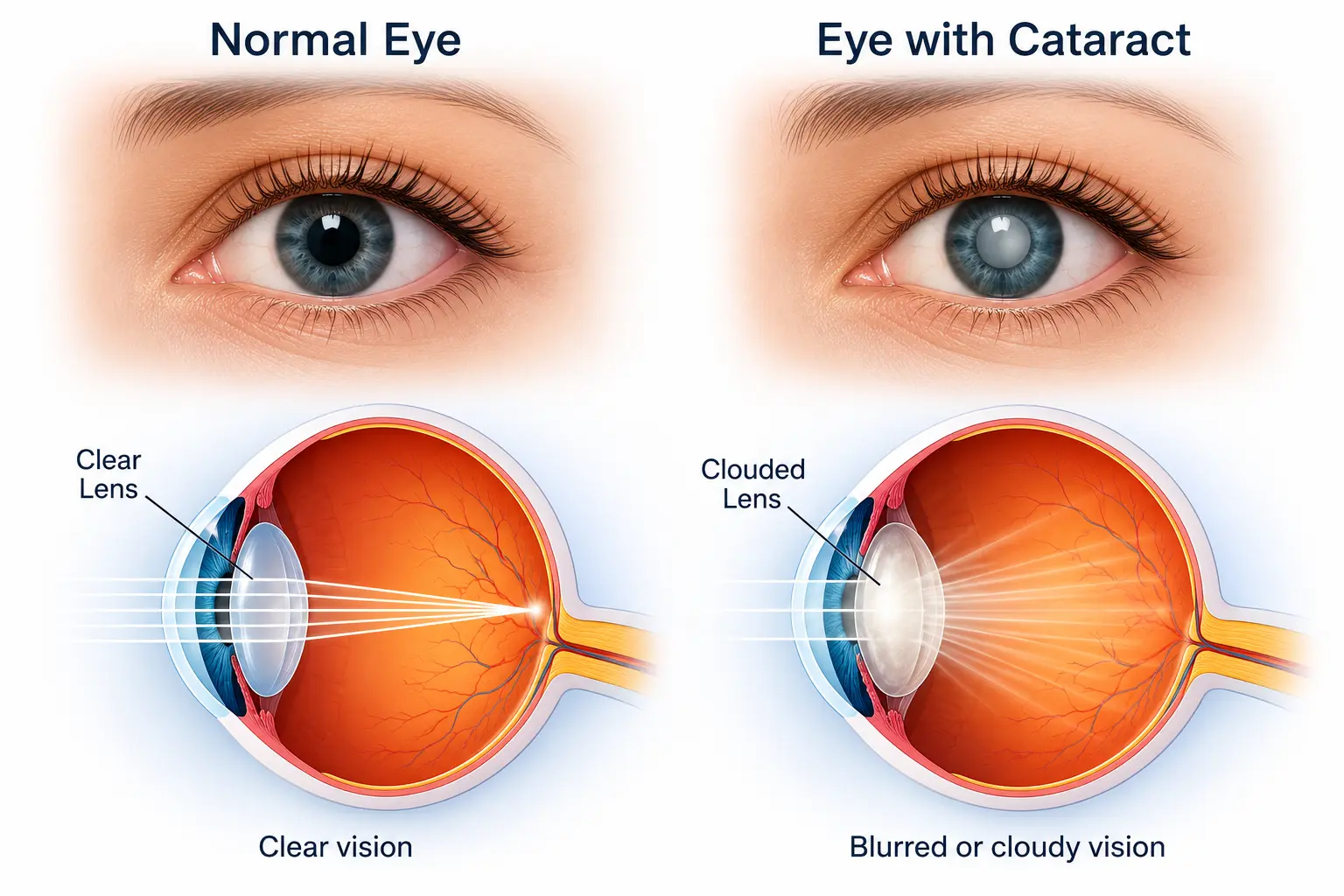
Inside your eye is a clear lens. Its job is to focus light so you can see sharp images.
As we grow older, proteins inside this lens slowly change. Instead of staying clear, they begin to clump together. Over time, the lens becomes cloudy.
This cloudy lens is called a cataract.
Think of it like looking through a clean window that slowly becomes foggy. No matter how much you clean the outside, the fog on the inside of the glass remains. I often tell my patients not to think of a cataract as a layer growing over the eye. It develops inside the natural lens itself. Once they understand this, it becomes much easier to see why medicines cannot make the lens clear again.
That is why simply using eye drops cannot remove a cataract.
Can Cataracts Go Away On Their Own?
This is the question I hear frequently in my hospital when patients visit for cataract surgery.
Unfortunately, no.
Cataracts do not disappear naturally. They also do not become clear again with rest, exercise, or dietary changes.
Many patients notice that their vision stays “manageable” for months or even years. This does not mean the cataract has improved. It simply means it is progressing slowly.
Eventually, most cataracts continue to become denser with time.
Can Eye Drops Cure Cataracts Without Surgery?
When people ask whether cataracts can be cured without surgery, they are usually hoping that eye drops or medicines can remove the cloudy lens. This is probably the biggest myth on the internet.
You may find advertisements claiming special eye drops can dissolve cataracts.
At present, there are no scientifically proven eye drops approved to cure or reverse cataracts in humans. Researchers continue to study possible treatments, but none have replaced surgery.
Every few months, someone brings me a bottle of eye drops or a newspaper clipping that promises to dissolve cataracts. I understand why people want to believe these claims. Avoiding surgery feels like the easier option. Unfortunately, there is no clinical evidence that these products can reverse an existing cataract.
If someone promises that a bottle of eye drops can remove a cataract, it is best to be cautious.
What About Natural Remedies?
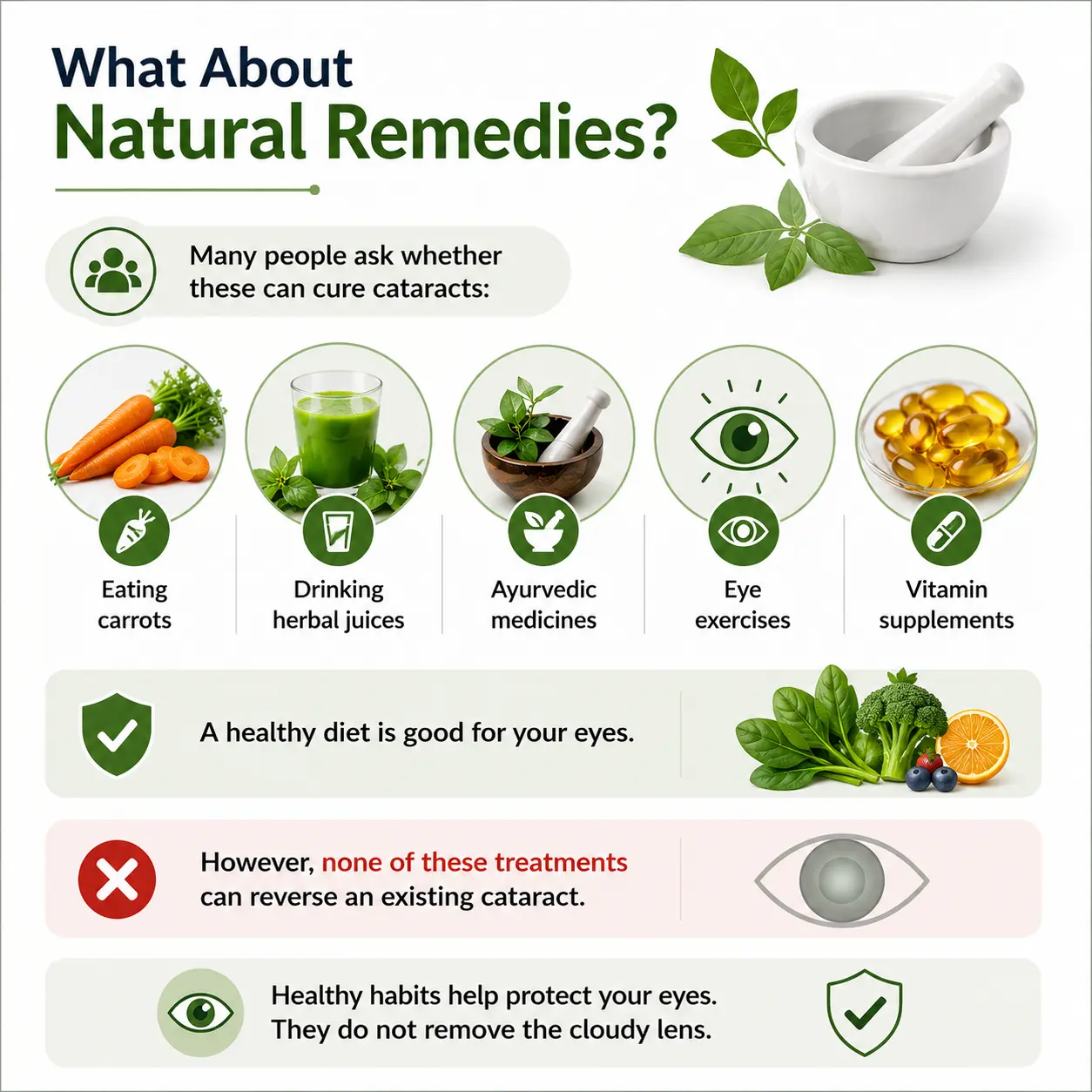
Many people ask whether these can cure cataracts:
- Eating carrots
- Drinking herbal juices
- Ayurvedic medicines
- Eye exercises
- Vitamin supplements
A healthy diet is good for your eyes.
Foods rich in vitamins A, C, E, leafy vegetables, and antioxidants support overall eye health. Wearing UV-protective sunglasses and avoiding smoking may also help reduce further damage to the lens.
However, none of these treatments can reverse an existing cataract.
Healthy habits help protect your eyes. They do not remove the cloudy lens.
That is an important difference.
If Surgery Is The Only Cure, Why Do Some People Wait?
This is another common concern.
The truth is, not everyone needs cataract surgery immediately after diagnosis.
In the early stages, simple changes may help you see better for some time.
These include:
- Updating your glasses
- Using brighter lighting while reading
- Wearing anti-glare sunglasses
- Avoiding night driving if headlights bother you
Many people continue their normal routine for months or years before surgery becomes necessary.
The decision depends on how much your vision affects your daily activities. In my hospital, I rarely decide on surgery based solely on the cataract. I pay close attention to how much it is affecting a person’s daily life. Someone who drives every day may need surgery earlier than someone whose routine is less visually demanding.
How Do You Know When It Is Time For Cataract Surgery?
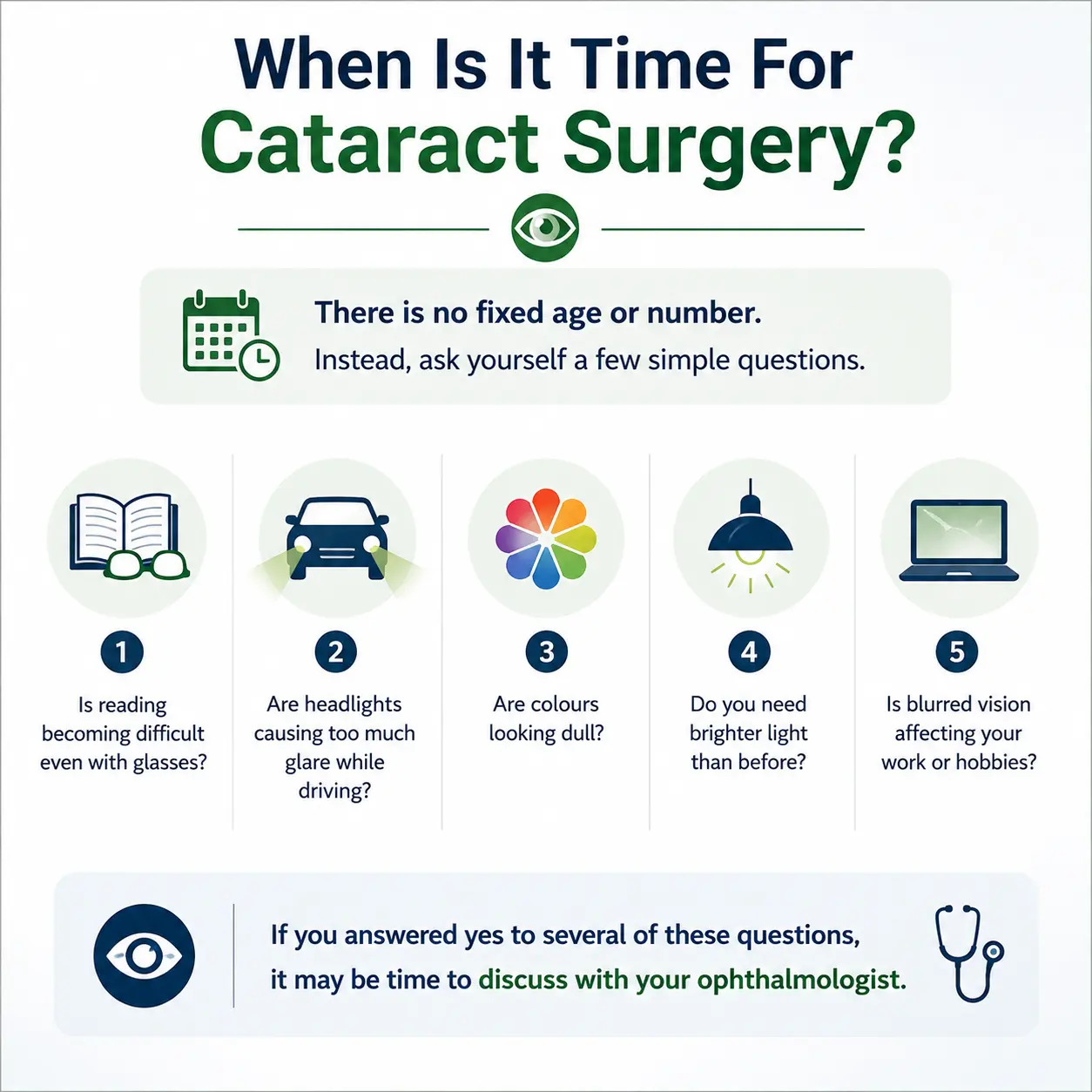
There is no fixed age or number.
Instead, ask yourself a few simple questions.
- Is reading becoming difficult even with glasses?
- Are headlights causing too much glare while driving?
- Are colours looking dull?
- Do you need brighter light than before?
- Is blurred vision affecting your work or hobbies?
If you answered yes to several of these questions, it may be time to discuss cataract surgery with your ophthalmologist.
The goal is not simply to remove a cataract.
The goal is to improve your quality of life.
Is Cataract Surgery Safe?
One thing I have noticed over the years is that people are usually more anxious about the idea of surgery than the procedure itself. Most patients tell me afterwards that it was much easier than they had imagined. Many people imagine cataract surgery as a major operation.
Today’s cataract surgery is very different.
It is one of the most commonly performed eye surgeries worldwide. The procedure usually takes around 15 to 30 minutes and is done under local anaesthesia using numbing eye drops. Most patients return home the same day.
Vision often begins improving within a day or two, although complete healing takes a few weeks.
Like every surgery, there are risks, but serious complications are uncommon when performed by an experienced ophthalmologist.
Can Cataracts Come Back After Surgery?
This is another question patients frequently ask.
The answer is no.
Once the cloudy natural lens is removed, that cataract cannot return.
Some patients may later develop cloudiness in the thin capsule behind the new lens. This is called posterior capsule opacification (PCO). It is not a new cataract and can usually be treated with a quick laser procedure.
Can Cataracts Be Prevented?
Many of my patients ask if there was anything they could have done to stop cataracts from developing. Age-related cataracts are a natural part of getting older, but healthy lifestyle habits can help protect overall eye health. Not all cataracts can be prevented because ageing is the biggest risk factor.
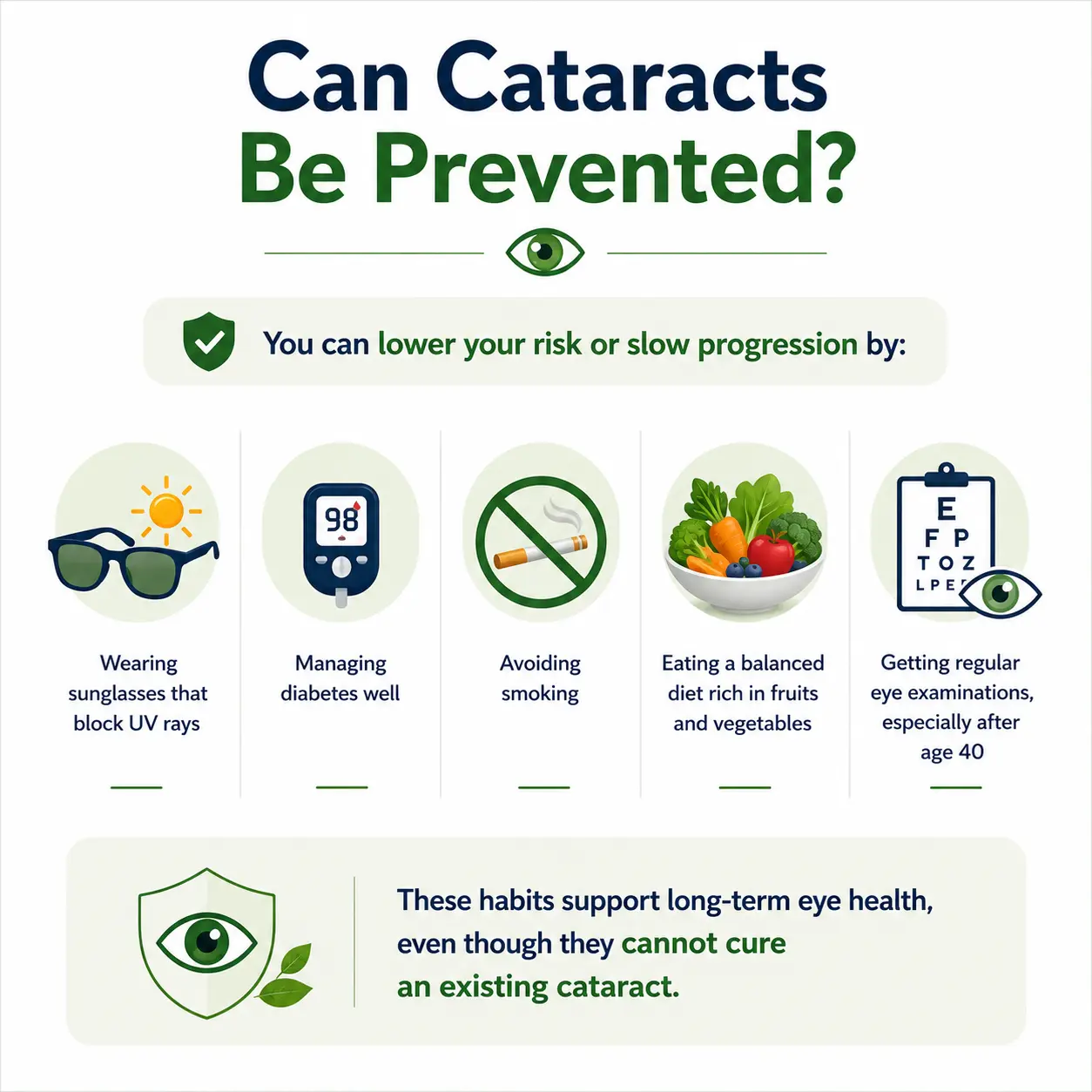
However, you can lower your risk or slow progression by:
- Wearing sunglasses that block UV rays
- Managing diabetes well
- Avoiding smoking
- Eating a balanced diet rich in fruits and vegetables
- Getting regular eye examinations, especially after age 40
These habits support long-term eye health, even though they cannot cure an existing cataract.
The Bottom Line
If you searched for ” can cataract be cured without surgery”, the answer may not be what you were hoping for. Based on current medical evidence, cataracts cannot be reversed with medicines, eye drops, or home remedies.
Cataracts cannot be cured without surgery. Once the lens becomes cloudy, surgery is the only treatment that restores clear vision.
The good news is that you may not need surgery immediately. If your vision is still good enough for daily activities, your ophthalmologist may simply monitor the cataract and recommend regular eye check-ups.
When the cataract begins limiting your life, modern cataract surgery offers a safe and highly effective way to restore clear vision.
One piece of advice I always give my patients is not to wait until vision becomes severely affected before seeking help. A simple eye examination can tell us how advanced the cataract is and whether surgery is needed now or whether it is safe to continue monitoring it. Having the right information often removes much of the fear surrounding cataracts.
If you have noticed blurry vision, increased glare, or difficulty reading despite wearing glasses, schedule a comprehensive eye examination. Knowing the stage of your cataract is the first step toward making the right decision for your eyes.