
What Causes Glaucoma?
Understanding Why It Develops and Who Is Most at Risk

Imagine being told during a routine eye check-up that you have high eye pressure or that you are a “glaucoma suspect.” One of the first questions that naturally follows is,
“Doctor, what caused this?”
It’s a question I hear often in my practice.
Many people expect glaucoma to have one clear cause, much like an infection or an injury. They wonder if it happened because of ageing, stress, too much screen time, or something they did wrong.
The truth is more complex.
In most cases, glaucoma develops because several factors work together over time. While high eye pressure is one of the most important risk factors, it is not the only reason glaucoma occurs. Some people with high eye pressure never develop glaucoma, while others develop optic nerve damage even when their eye pressure is considered normal.
Understanding what causes glaucoma helps you recognise your own risk, seek timely screening, and protect your vision before permanent damage occurs.
- Glaucoma rarely has one single cause; it usually develops when several risk factors interact over time.
- High eye pressure is the strongest modifiable risk factor, but it is not the disease itself, and glaucoma can occur even at normal pressure.
- Optic nerve damage from glaucoma cannot be reversed, so any vision already lost is permanent.
- Glaucoma often has no early symptoms, which is why regular eye examinations are the key to catching it in time.
- Early diagnosis and consistent treatment can slow the disease and protect useful vision for many years.
Is There One Main Cause of Glaucoma?
The simple answer is no.
Despite years of research, we cannot point to one exact cause in most patients with glaucoma.
Instead, glaucoma develops when the optic nerve, which carries visual information from your eyes to your brain, becomes damaged over time. Once these nerve fibres are damaged, they cannot regenerate. That is why vision loss caused by glaucoma is usually permanent.
One of the biggest challenges is that this damage happens slowly. Your brain gradually adapts, so many people continue seeing normally until significant vision has already been lost. This is why glaucoma is often called the “silent thief of sight.”
How Does Glaucoma Develop?
Your eye continuously produces a clear fluid that nourishes its internal structures. At the same time, this fluid drains away through tiny drainage channels.
Think of it like a sink with the tap left running. As long as the drain works properly, the water level remains normal. But if the drain becomes less efficient, water slowly builds up.
Something similar can happen inside the eye.
When fluid does not drain properly, pressure inside the eye may increase. This pressure can place stress on the optic nerve and gradually damage it.
However, this is where many people misunderstand glaucoma.
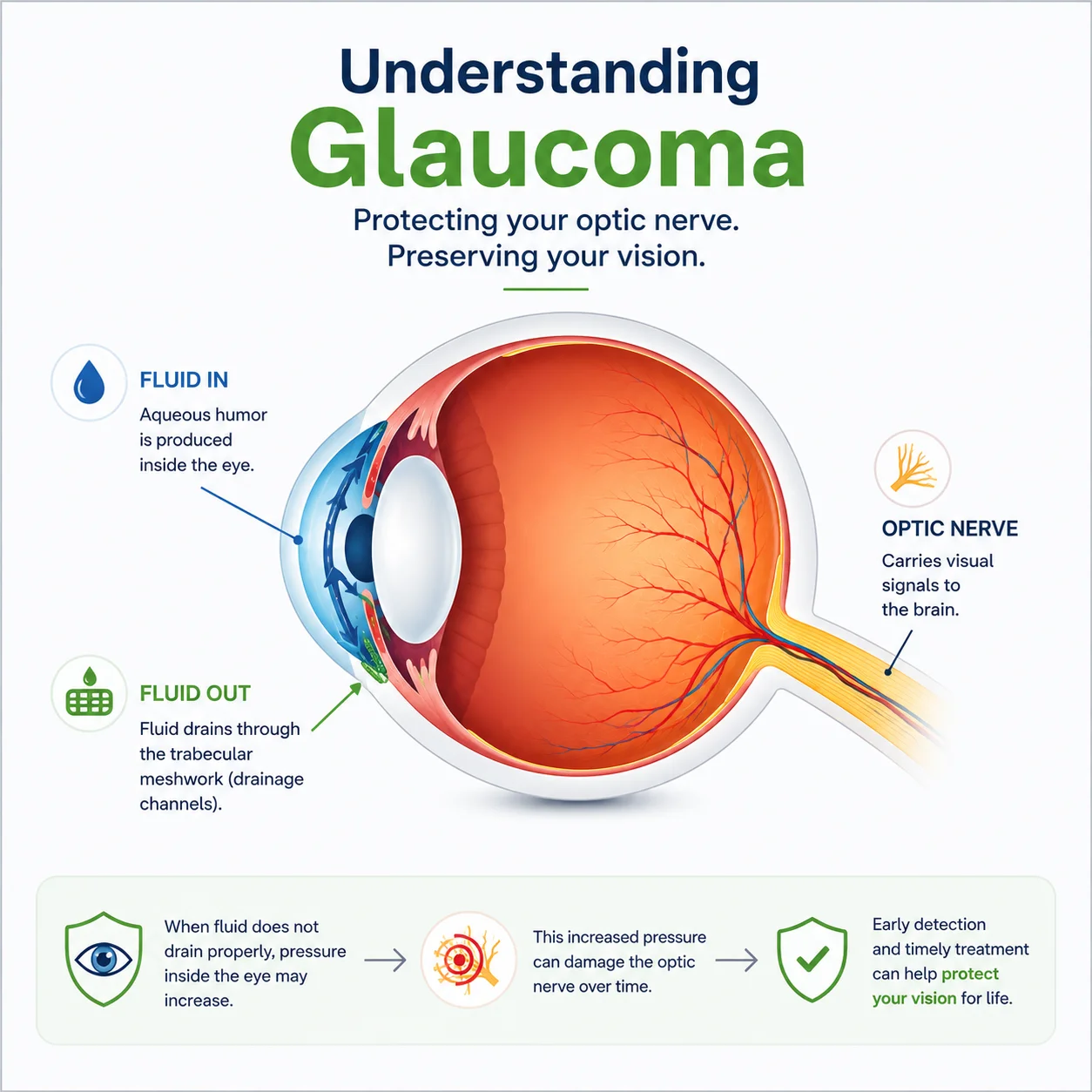
Higher eye pressure does not automatically mean glaucoma, and glaucoma does not always require high eye pressure.
Does High Eye Pressure Always Cause Glaucoma?
No.
This is one of the biggest misconceptions I discuss with my patients.
Some people become extremely worried after learning their eye pressure is slightly high. Others are surprised when I diagnose glaucoma even though their eye pressure falls within the normal range.
Both situations are possible.
High eye pressure is the strongest known modifiable risk factor, but it is not the disease itself.
Every optic nerve has a different ability to tolerate pressure. Some people may have elevated eye pressure for years without developing glaucoma, while others develop optic nerve damage despite having “normal” pressure. This condition is known as normal-tension glaucoma.
That is why glaucoma cannot be diagnosed by measuring eye pressure alone.
As ophthalmologists, we also examine the optic nerve, assess peripheral vision, review imaging scans, and monitor pressure over time before confirming a diagnosis.
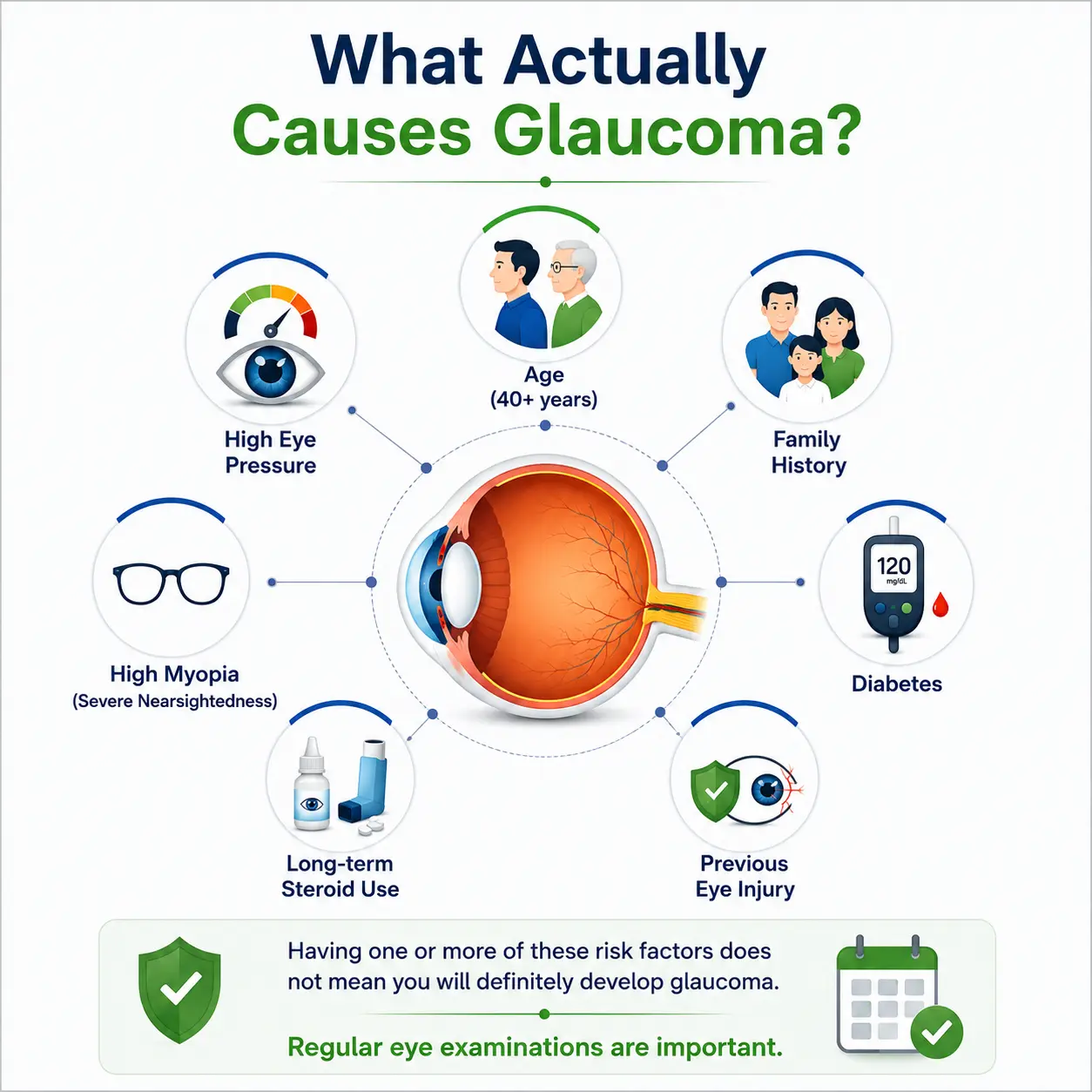
What Actually Causes Glaucoma?
The most common risk factors include:
Having one or more of these risk factors does not mean you will definitely develop glaucoma. It simply means regular eye examinations become even more important.
Can Glaucoma Be Prevented?
This is another question I hear frequently.
The honest answer is not always.
We cannot change our age, genes, or the natural structure of the optic nerve. So, glaucoma itself cannot always be prevented.
What can often be prevented is avoidable vision loss.
Early diagnosis, timely treatment, and regular follow-up can significantly slow the progression of glaucoma and help preserve useful vision for many years.
In my experience, patients diagnosed during routine eye examinations often maintain good vision because treatment begins before significant optic nerve damage occurs.
Don’t wait for symptoms. By the time glaucoma affects your vision, irreversible damage may already have occurred.
When Should You Get Screened for Glaucoma?
One of the biggest challenges with glaucoma is that it usually does not cause symptoms in its early stages. Many people believe that if they can see clearly, their eyes must be healthy. Unfortunately, that isn’t always true.
I often remind my patients that the absence of symptoms should never be mistaken for the absence of disease.
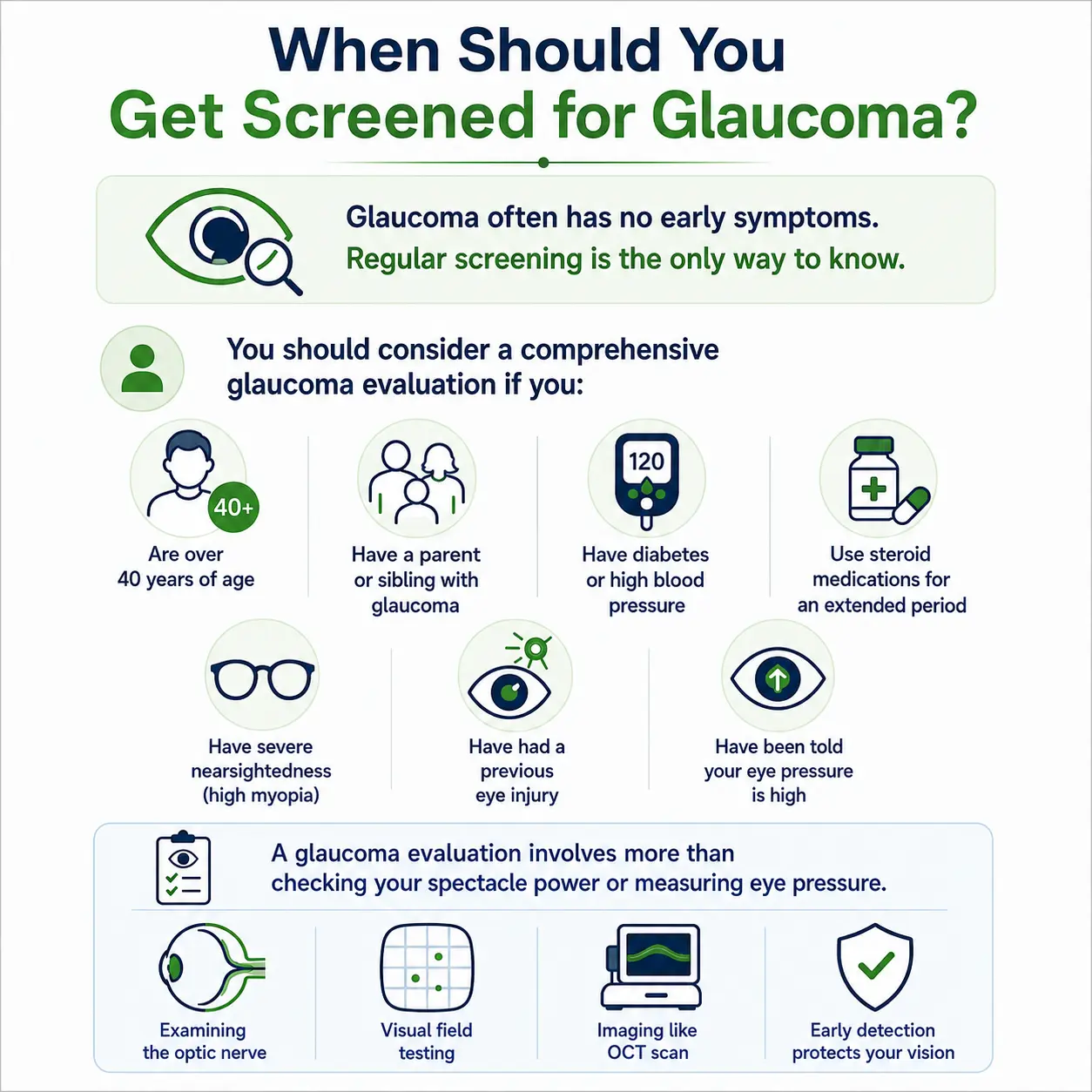
You should consider a comprehensive glaucoma evaluation if you:
- Are over 40 years of age
- Have a parent or sibling with glaucoma
- Have diabetes or high blood pressure
- Use steroid medications for an extended period
- Have severe nearsightedness (high myopia)
- Have had a previous eye injury
- Have been told your eye pressure is high
A glaucoma evaluation involves much more than checking your spectacle power or measuring eye pressure. Your ophthalmologist may also examine the optic nerve, perform a visual field test, or recommend imaging such as an OCT scan to detect early damage.
When Should You See an Ophthalmologist Immediately?
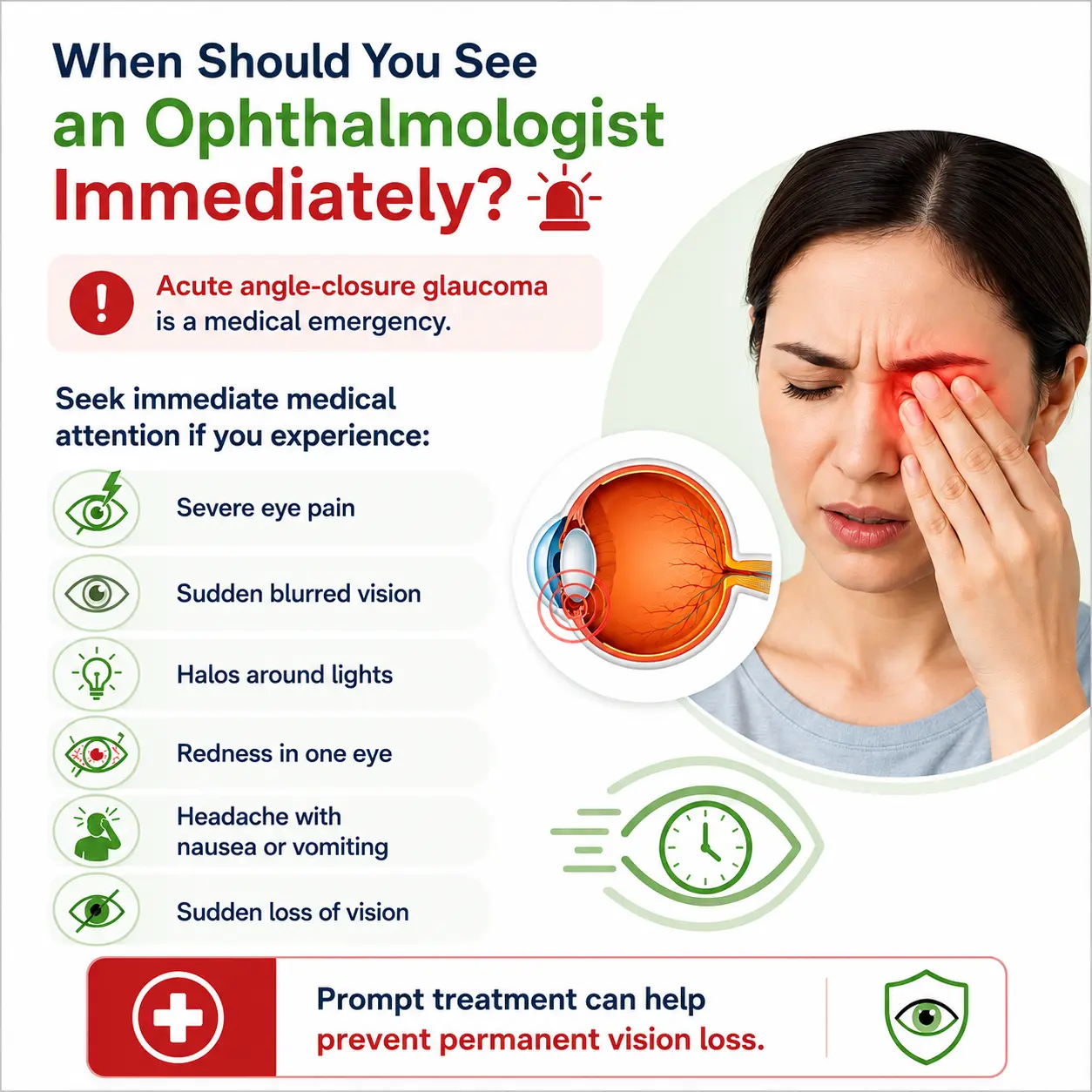
Most types of glaucoma develop slowly, but one form, acute angle-closure glaucoma, is a medical emergency.
Seek immediate medical attention if you experience:
- Severe eye pain
- Sudden blurred vision
- Halos around lights
- Redness in one eye
- Headache with nausea or vomiting
- Sudden loss of vision
Prompt treatment can help prevent permanent vision loss.
Common Myths About Glaucoma
There is a lot of misinformation about glaucoma. Here are a few myths I commonly address during consultations.
High eye pressure always means glaucoma.
Not everyone with high eye pressure develops glaucoma, and some people develop glaucoma despite having normal eye pressure.
If my vision is normal, I cannot have glaucoma.
Most patients have no noticeable symptoms until the disease is already advanced.
Only older adults develop glaucoma.
Although age increases the risk, glaucoma can also affect younger adults and, in rare cases, children.
Reading, mobile phones, or computer use causes glaucoma.
There is no scientific evidence that these activities cause glaucoma.
One message I always share with my patients is this:
Don’t spend too much time asking, “Why did I get glaucoma?” Instead, ask, “What should I do from here?”
In many patients, we simply cannot identify one exact cause. What we do know is that early diagnosis makes a significant difference.
I have cared for patients who have preserved good vision for decades because their glaucoma was detected early and they stayed consistent with treatment and follow-up. I have also seen patients who delayed eye examinations because they had no symptoms, only to discover irreversible optic nerve damage later.
The difference often comes down to early detection, not symptoms.
If you have a family history of glaucoma, diabetes, long-term steroid use, or you’ve been told your eye pressure is high, don’t wait for your vision to change. A comprehensive eye examination today may help protect your eyesight for years to come.
Final Thoughts
If you’ve searched “what causes glaucoma,” you’re probably looking for a simple answer. The reality is that glaucoma rarely develops because of one single reason. It usually results from a combination of risk factors, including ageing, genetics, optic nerve susceptibility, and sometimes elevated eye pressure.
The encouraging news is that glaucoma can often be detected before it affects your vision. Regular eye examinations remain the most effective way to identify the disease early and begin treatment before irreversible damage occurs.
As I often remind my patients, don’t wait for symptoms to tell you something is wrong. Early diagnosis gives us the best opportunity to protect the vision you have.