LASIK Surgery
in Chennai
What is LASIK Surgery
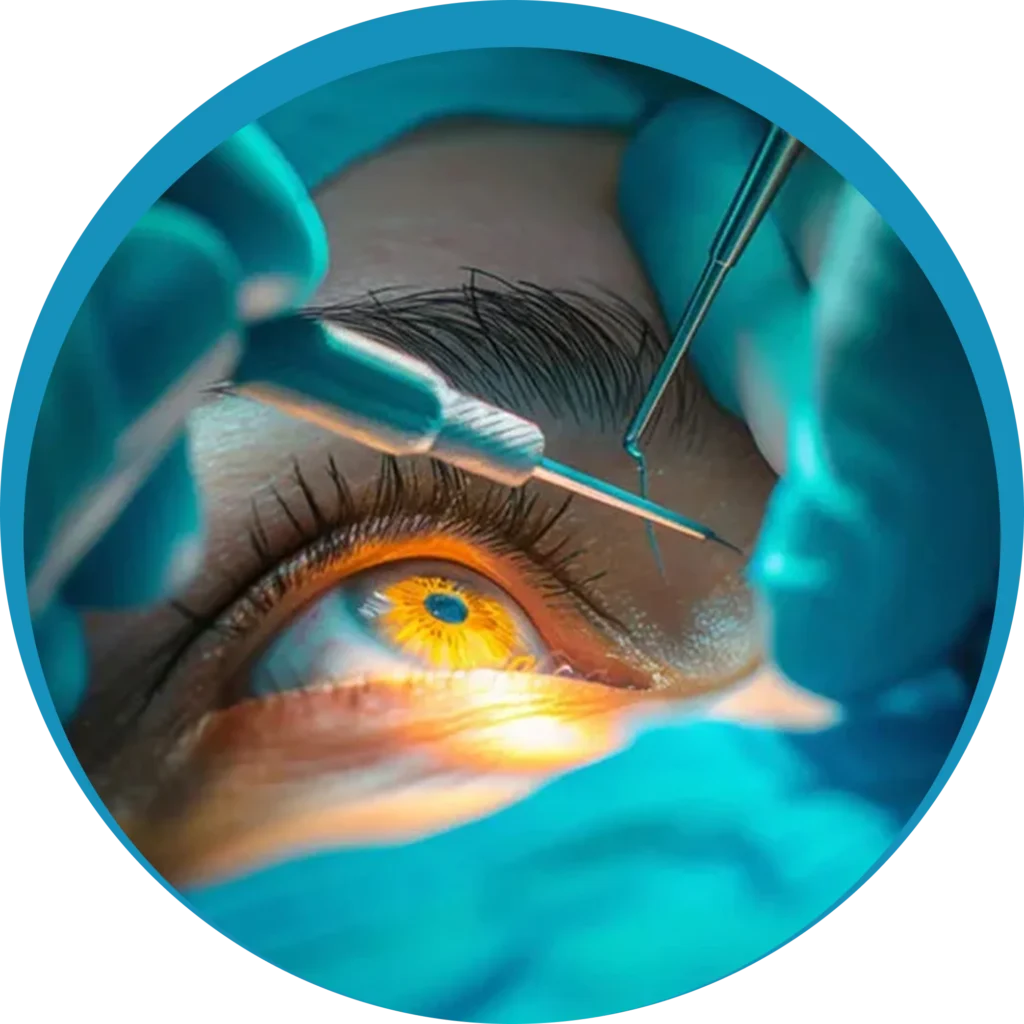
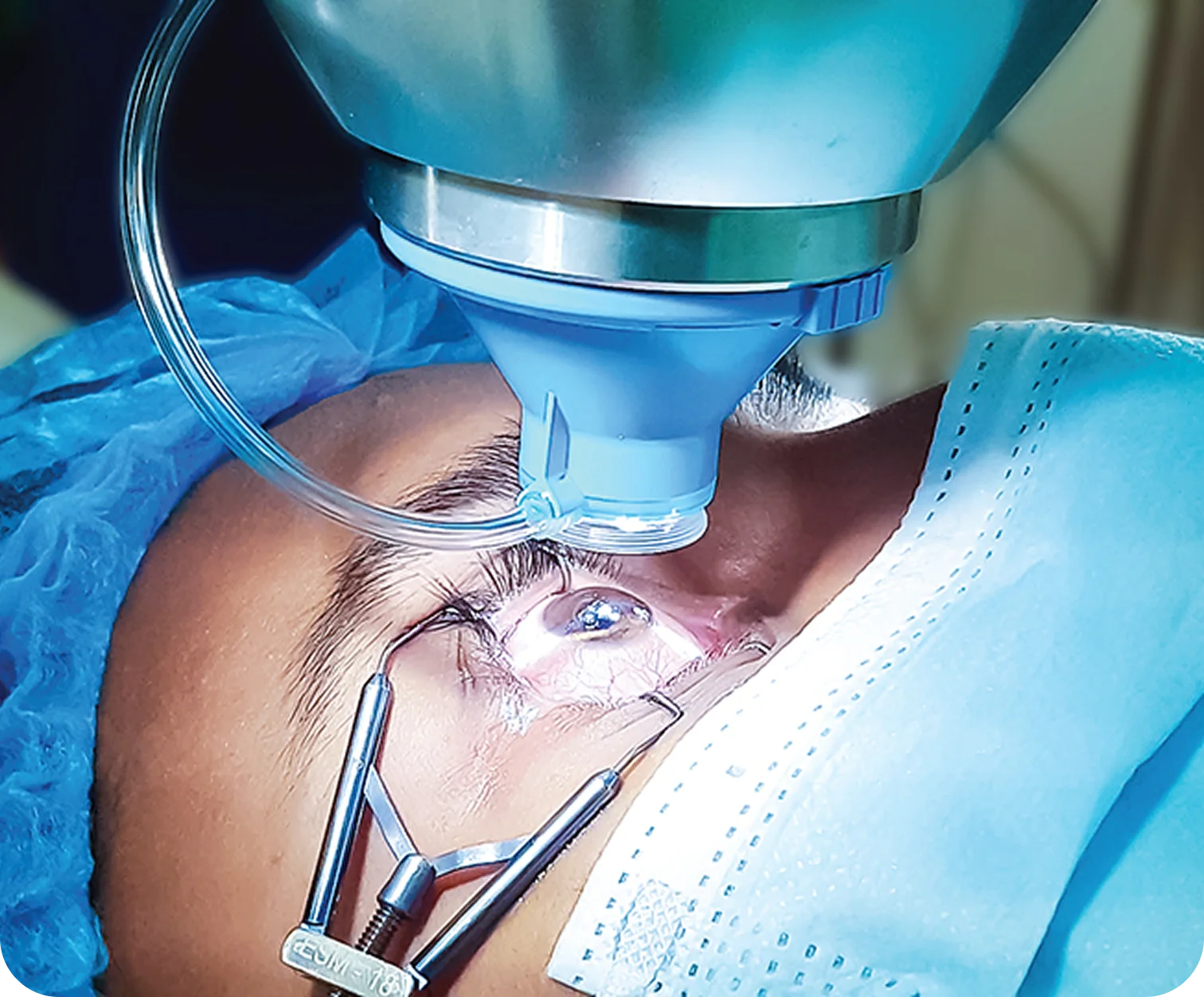
LASIK surgery refers to a group of refractive eye surgery procedures that reduce or eliminate the need for glasses or contact lenses. These procedures work by correcting how light focuses inside the eye, making vision clearer.
Some procedures reshape the cornea using a laser, while others involve placing a corrective lens inside the eye. Common options include LASIK, SMILE, PRK, and Implantable Collamer Lens.
The choice depends on your eye condition, not just preference.
How Vision Works and What Goes Wrong?
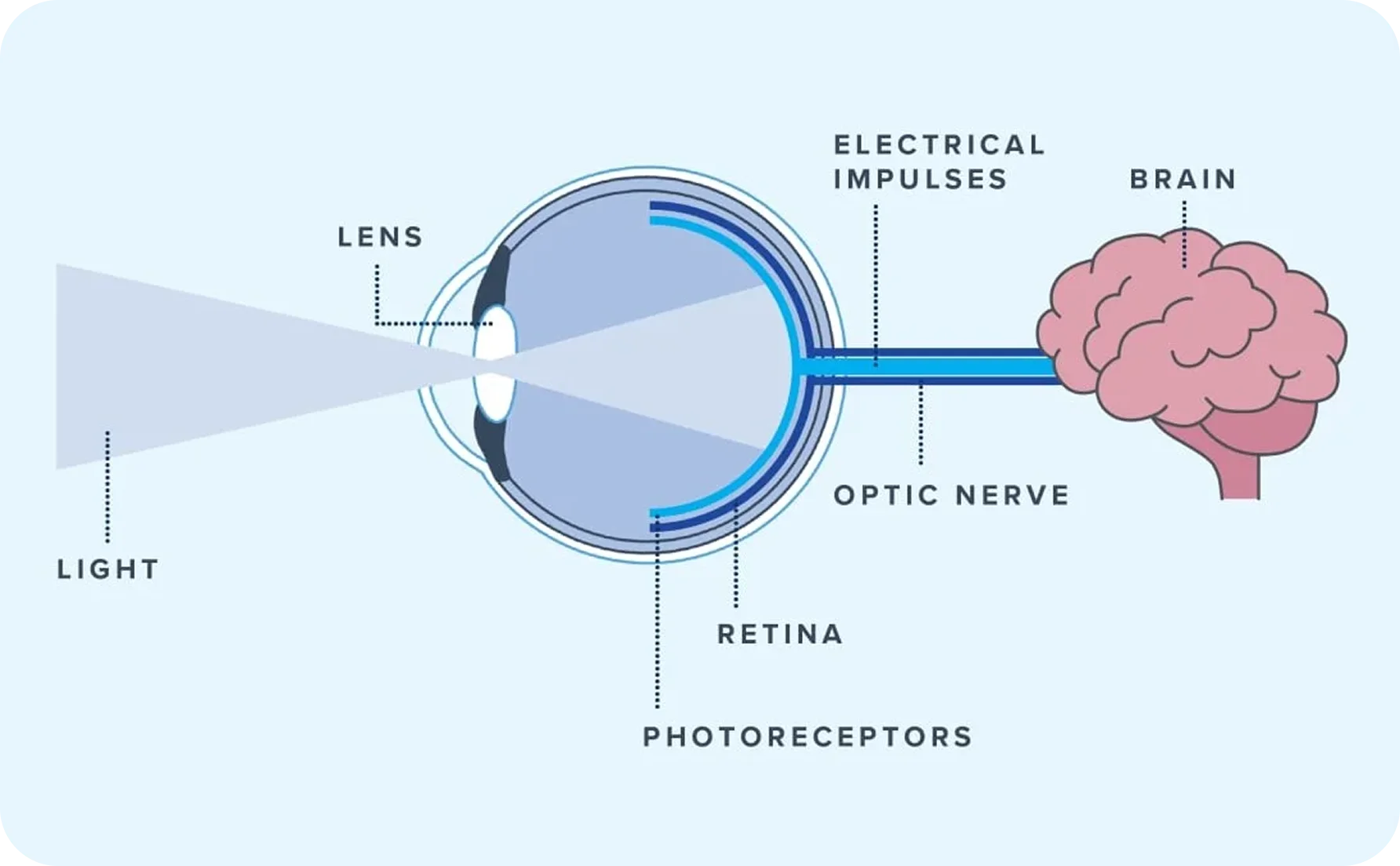
For clear vision, light entering the eye must focus precisely on the retina.
Light first passes through the cornea and then through the natural lens, which together help bring it into focus. When this system works properly, vision is sharp.
Refractive errors occur when light does not focus correctly on the retina:
- Myopia: Where distant objects look blurred
- Hyperopia: Where near objects are difficult to see clearly
- Astigmatism: In which vision appears distorted or uneven
With the LASIK eye surgery in Chennai, we aim to correct this focusing problem.
Who Can Benefit from Refractive Eye Surgery in Chennai?
People who depend on glasses daily
Those with active lifestyles
Individuals looking for convenience in daily life
It is not limited to a specific age group, but suitability varies.
Why Glasses, Exercises or Eye Drops Cannot Correct Refractive Errors?
Refractive errors are caused by the shape of the eye or cornea, which affects how light is focused on the retina. Because this is a structural issue, it cannot be corrected with medication, eye drops, or exercise.
Glasses and contact lenses help improve vision by adjusting how light enters the eye, but they do not change the underlying cause. Once they are removed, the same visual problem remains.
Procedures like LASIK or lens-based corrections are designed to address this structural issue and provide a more lasting solution.
Scientific Reasoning
These procedures work by adjusting the eye’s focusing power. This can be done by reshaping the cornea or by placing a lens inside the eye so that light falls correctly on the retina.
With LASIK eye surgery in Chennai, our goal is to give you a clearer vision without external aids, while maintaining safety and stability.
Are You an Ideal Candidate for LASIK Surgery in Chennai
Stable power for some time
Healthy eyes
Adequate corneal thickness
Some people may not be suitable for certain procedures but may still qualify for alternatives.
Types of LASIK Surgery Procedures
The right choice depends on a detailed evaluation.
These procedures all involve the front surface of the eye (the cornea).
The goal is the same, but the method differs.
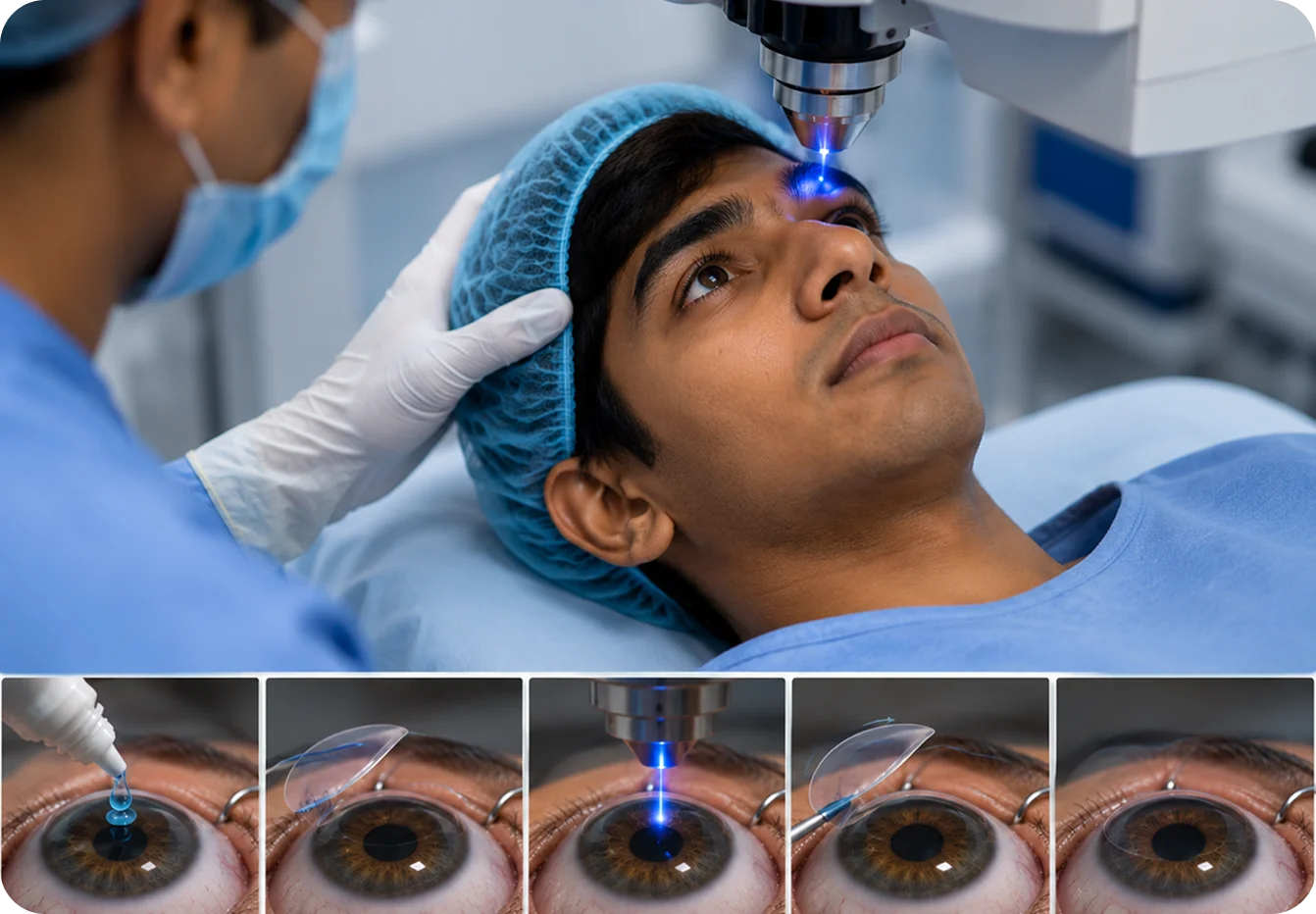
A thin layer (flap) is created on the cornea, lifted, and a laser reshapes the underlying surface. The flap is then placed back.
In simple terms:
Dr Bhaskar lifts the top layer, reshapes the eye underneath, and puts it back.
Why it’s used:
- Fast recovery
- Minimal discomfort
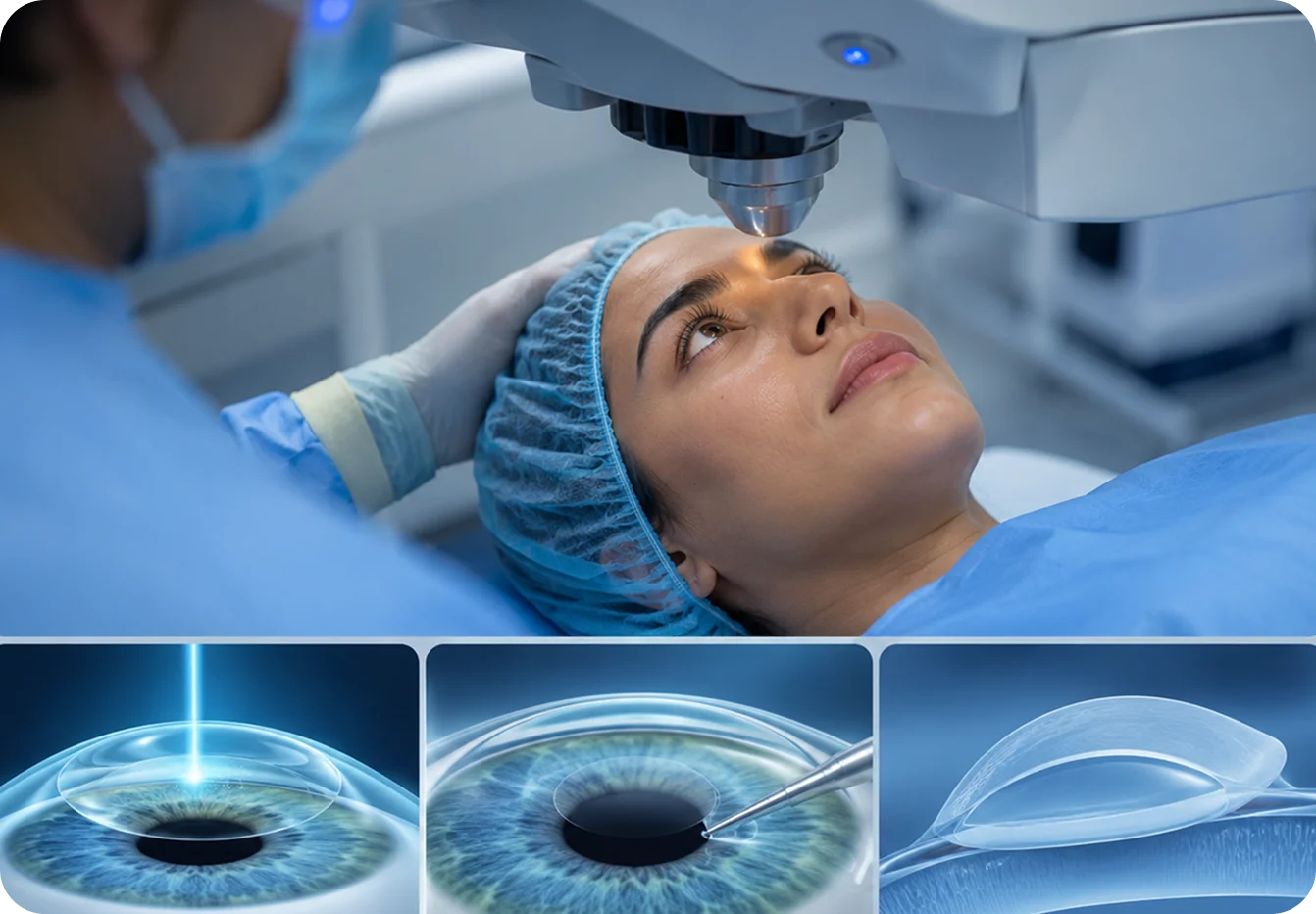
A small piece of tissue is created inside the cornea using a laser and removed through a tiny incision.
In simple terms:
Instead of lifting a flap, a small portion inside the eye is removed through a keyhole opening.
Why it’s used:
- No flap
- May reduce dryness in some patients
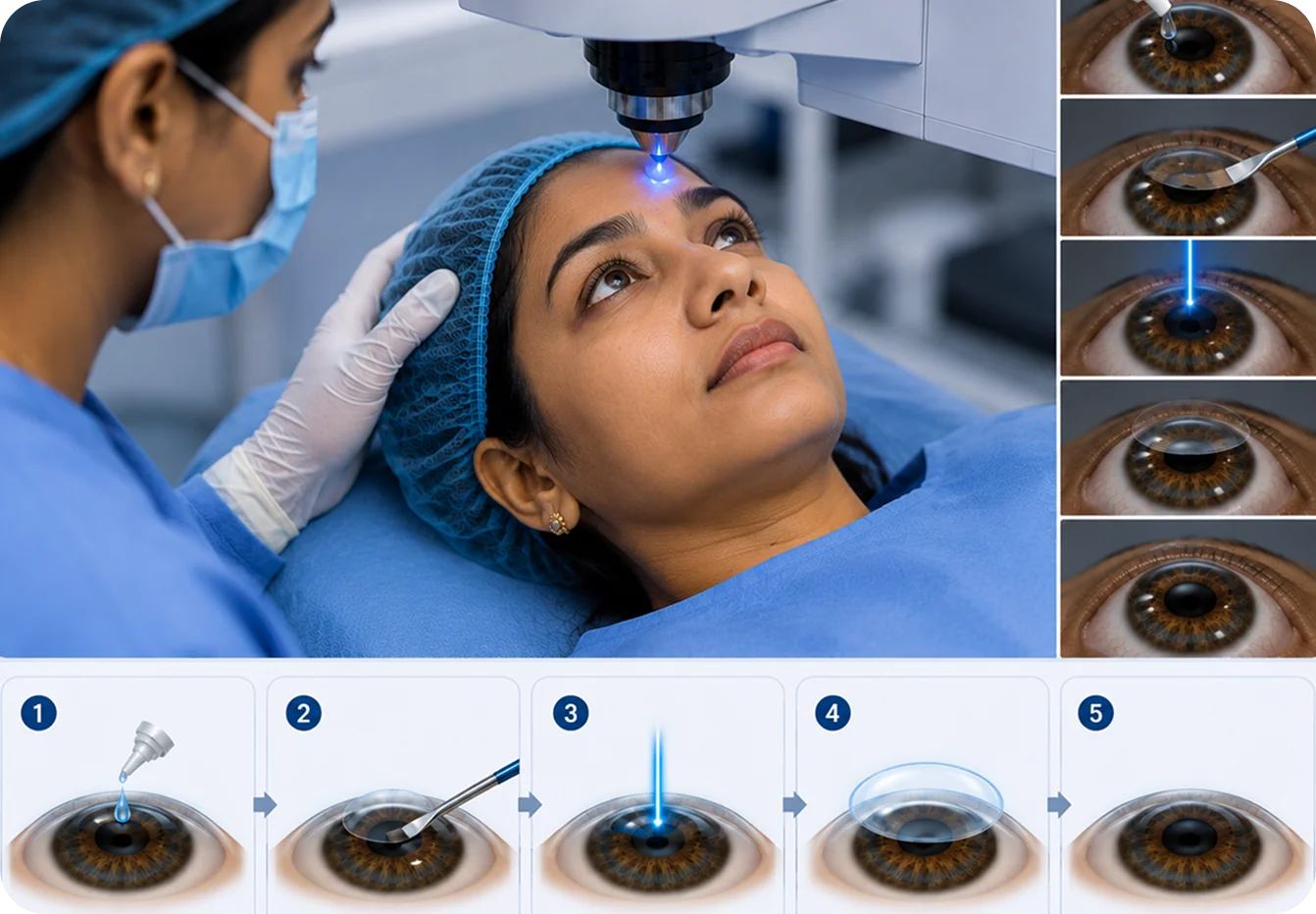
The outermost layer of the cornea is gently removed, and the laser reshapes the surface directly.
In simple terms:
No flap is created. The surface layer is treated directly and heals over time.
Why it’s used:
- Suitable for thinner corneas
- Takes longer to heal
Implantable Collamer Lens
This procedure works differently from laser treatments.
Instead of reshaping the cornea, a thin, flexible lens is placed inside the eye, behind the iris (the colored part of your eye). The natural lens is not removed.
In simple terms:
A new lens is added inside your eye to correct vision, without changing the surface.
When is this considered?
This option is usually recommended when:
- Eye power is very high
- The cornea is too thin for laser procedures
- Laser-based options are not suitable
What are the advantages?
- Does not involve cutting or reshaping the cornea
- Suitable for patients who are not candidates for LASIK or SMILE
- The lens can be removed or replaced if needed
What should you know?
- It is a slightly more advanced procedure compared to laser methods
- Requires proper evaluation and measurements
- Vision improvement is often noticeable quickly
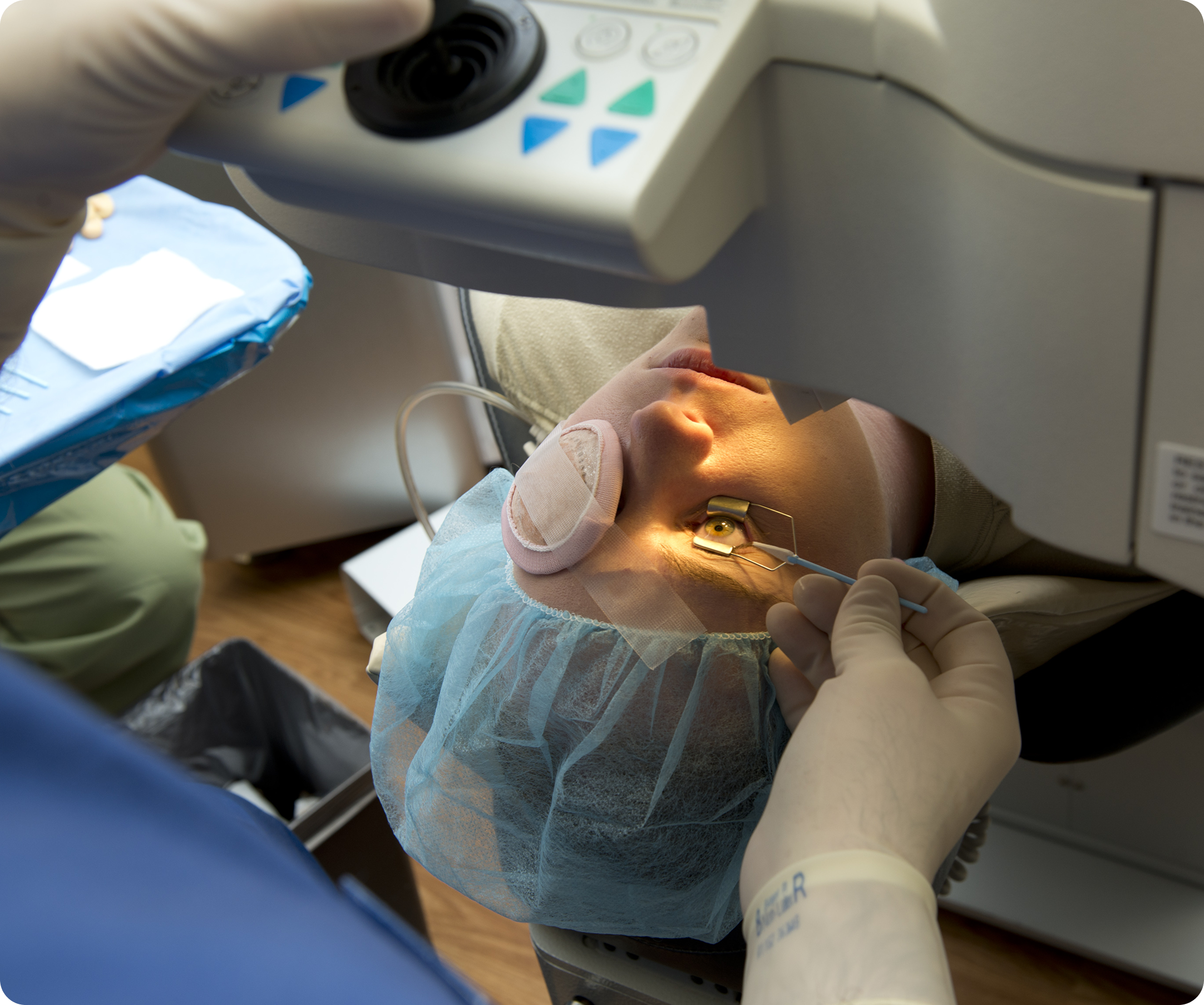
If laser procedures are not suitable, it does not mean you cannot undergo vision correction.
Lens-based options like ICL provide an effective alternative, especially in complex or high-power cases.
LASIK vs SMILE vs PRK: What’s the Difference?
| Factor | LASIK | SMILE | PRK |
|---|---|---|---|
| How it works | A thin flap is created, the underlying cornea is reshaped, and the flap is placed back | A small piece of tissue is removed through a tiny incision (no flap) | The surface layer is removed, and the cornea is reshaped directly |
| Flap involved? | Yes | No | No |
| Incision size | Larger flap | Very small (keyhole) | No incision, surface treatment |
| Recovery speed | Fast (1–3 days) | Fast (few days) | Slower (1–2 weeks or more) |
| Comfort after surgery | Mild discomfort | Usually mild | More discomfort initially |
| Best suited for | Most patients with normal corneal thickness | Patients wanting no flap or with dry eye concerns | Patients with thin corneas/specific occupations |
| Risk of dryness | Slightly higher in some cases | May be lower compared to LASIK | Lower than LASIK |
| Return to work | Quick | Quick | Takes longer |